
Which weight are you asking about?
Separate the vehicle's mass without waste, its actual mass in service and the permitted maximum for the complete vehicle. GVW or GVWR usually identifies a gross mass rating, not the amount of rubbish that can be loaded. A truck described as 18 tonnes does not therefore carry 18 tonnes of waste.
Agree the definition behind each empty-mass figure. The UK government's vehicle-weight guide distinguishes unladen weight from mass in running order, with different inclusions. Do not assume curb mass, unladen mass and ready-to-work mass are interchangeable labels across every market. Identify whether crew, fluids and fitted equipment are included.
What do two CLW configurations show?
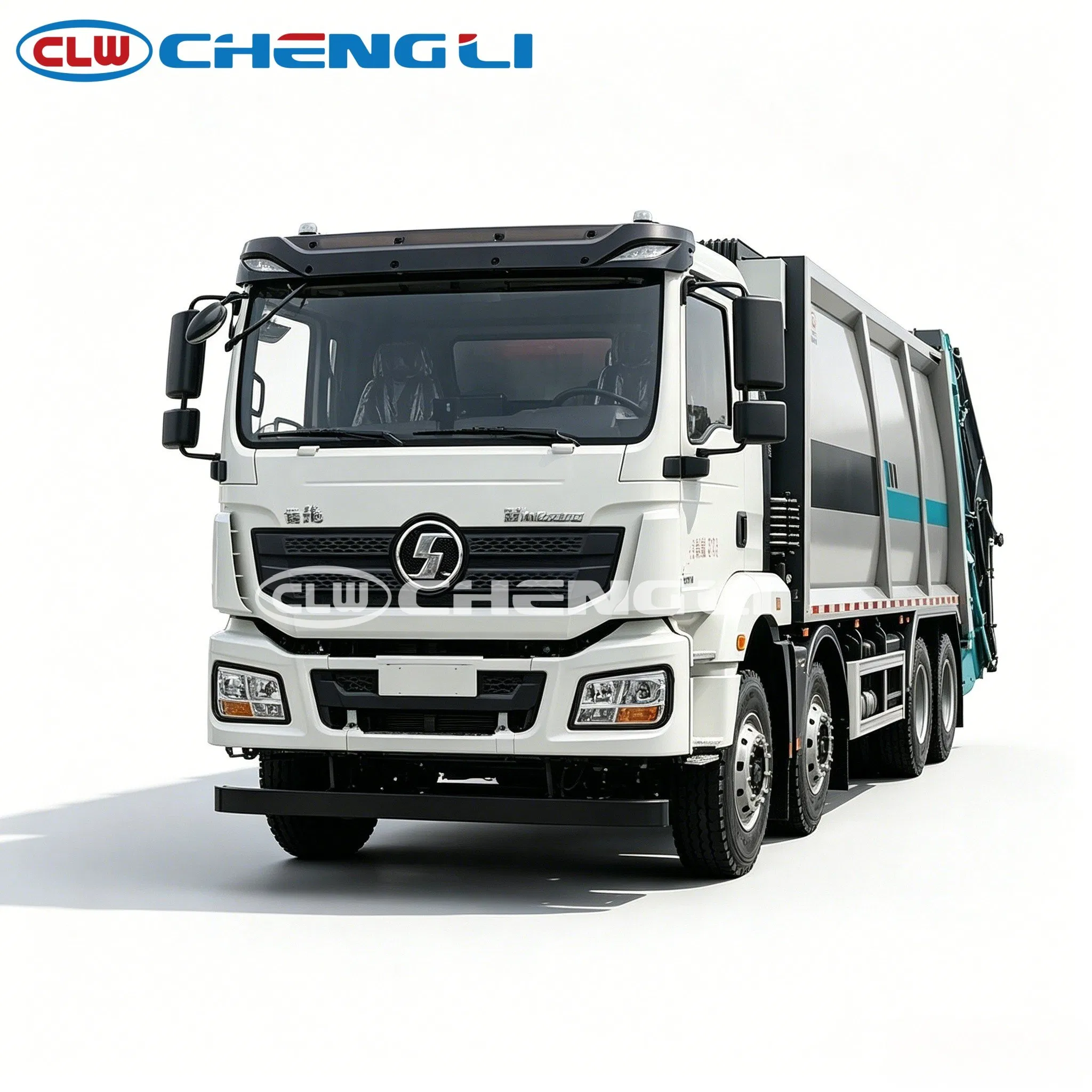
The two electric examples below have different chassis and body configurations. All masses are in kilograms; body volume identifies the first example, not its waste load. These figures describe the particular configurations and do not establish a weight range for all electric or all refuse trucks.
| Configuration | GVW / GVWR (kg) | Curb mass (kg) | Rated payload (kg) |
|---|---|---|---|
| Dongfeng 9.5 m³ electric compactor | 11,995 | 6,900 | 4,965 |
| CL89EV 18 t GVW electric refuse truck | 18,000 | 12,250 | 5,620 |
Check the complete vehicle’s mass information against its configuration and destination requirements. A change of chassis, battery, body or collection equipment can change the mass balance. Match the agreed gross rating, empty-mass definition and payload to the truck being purchased, rather than applying one example to every vehicle of similar appearance.
Why is gross minus curb not automatically the usable payload?
For the CL89EV example, subtracting 12,250 kg from 18,000 kg gives 5,750 kg. Its rated payload is 5,620 kg. Do not replace that payload with the larger subtraction. The permitted load must remain consistent with the complete configuration, its definitions and every applicable limit.
For a planning check, subtract the actual ready-to-work mass from the applicable gross limit, then respect the rated payload, axle limits and equipment limits as well. Count each item once. If a mass definition already includes a driver or fluids, do not deduct them again without understanding that definition.
Can a truck be below its gross limit but overload an axle?
Yes. Gross mass is the sum carried by all axles; it does not show how the load is distributed. Body position, waste distribution and fitted equipment affect individual axle loads. The following arithmetic example is entirely illustrative and is not a rating or loading instruction for a CLW model.
| Measurement | Illustrative limit (kg) | Illustrative measured load (kg) |
|---|---|---|
| Front axle | 6,000 | 5,000 |
| Rear axle | 10,000 | 10,500 |
| Complete vehicle | 16,000 | 15,500 |
The total is 500 kg below the example gross limit, but the rear axle is 500 kg above its example limit. Both checks matter. A chassis-and-body matching review should assess the intended loaded arrangement, not simply choose a chassis whose gross rating exceeds the estimated total.
Which added items change the weight calculation?
Bin lifters, container-handling equipment, tanks, guards, spare equipment and other specified additions form part of the complete build. A bare-chassis mass does not represent a finished garbage truck. On a container carrier, the carried container's own mass must also be accounted for when establishing the available waste load.
Include crew and operating items according to the adopted mass definition. Retained liquid or residual material can also affect the actual mass before a new collection round. Review changes to equipment against gross and axle loading. Do not assume a useful accessory adds working capability without affecting the vehicle's loading margin.
Does a full body always mean the same loaded weight?
No. Volume describes space; mass depends on what occupies that space. As a deliberately hypothetical example, 5 m³ of material at 200 kg/m³ is 1,000 kg, while the same volume at 500 kg/m³ is 2,500 kg. Neither density is a guaranteed value for a particular waste stream or truck.
Compaction changes how material occupies the body, not the mass already loaded. Keep body volume, waste density and payload separate. The capacity and compaction guide develops this distinction, while the metric dimensions table addresses access rather than permission to carry a load.
How should operators establish actual working masses?
Use suitable weighing arrangements to establish the complete vehicle's actual gross and individual axle loads in the relevant operating condition. Keep the configuration and conditions with the record: installed equipment, crew, fluids and the load represented. A vehicle identification and a clearly defined weighing condition make later comparisons more useful.
Overloading can impair stability, steering and stopping and place additional strain on tyres. The UK DVSA overloading guidance explains these risks and the importance of gross and axle checks. Destination enforcement and permitted limits need to be addressed for the actual market; these examples do not establish registration eligibility.
What should change when selecting the chassis?
Select the complete chassis, body and collection interface around the intended waste load and duty. Compare axle capacities, mounting position, wheelbase and the equipment being fitted. The chassis options page is a starting point for this discussion, rather than a promise that one gross rating suits every body.
Apply these checks to the Foton mini and Auman comparison and Shacman heavy-truck comparison. Their different vehicle classes make the distinction between body volume, gross rating and actual waste allowance especially important.
Include the collection side and driver layout. The full RHD build guide and LHD/RHD buyer guide explain related configuration questions. A change of chassis or working equipment should be reflected in the complete vehicle's dimensions, mass assessment and documentation.
What information helps CLW prepare a loading proposal?
Send the destination, vehicle quantity, waste description, daily tonnage, collection method and existing bin or container details. Explain how the route is divided into loads and where unloading takes place. Include measured load information where available, route restrictions, LHD or RHD and the required equipment.
Request a garbage truck proposal that identifies gross limits, empty-mass definitions and rated payload for the complete build. Define the axle-loading assessment and handover information with the specification. The goal is usable collection capacity within the actual vehicle's limits, rather than a large tonnage label on a quotation.
Questions buyers ask
Does an 18 t garbage truck carry 18 t of waste?
No. In the example, 18 t is the gross vehicle rating. The CL89EV configuration has a curb mass of 12,250 kg and a rated payload of 5,620 kg; apply its complete-vehicle and axle limits.
Why not use 5,750 kg as the CL89EV payload?
That is only 18,000 minus 12,250. The rated payload for this configuration is 5,620 kg. A subtraction does not replace the applicable payload, mass definitions, axle limits or equipment limits.
Can one axle be overloaded when the whole vehicle is below GVW?
Yes. Gross mass does not show distribution. The hypothetical table demonstrates a 15,500 kg total below a 16,000 kg limit while its rear axle exceeds its separate illustrative limit.
Can body volume tell me the loaded mass?
Not alone. You also need the material mass, loading condition and complete configuration. Different materials can reach a weight limit at different fill levels, and compaction does not remove mass.