In travelling position
Compare the complete vehicle’s width, mirrors, height, wheelbase and overhangs with the actual route. Include gates, parked vehicles, ramps and overhead obstructions.

CLW / GARBAGE TRUCK CONFIGURATION
Choose a garbage truck from the space it must pass through and work within. Measure the route first; a “mini” label is not a dimensional approval.
Discuss this truck configuration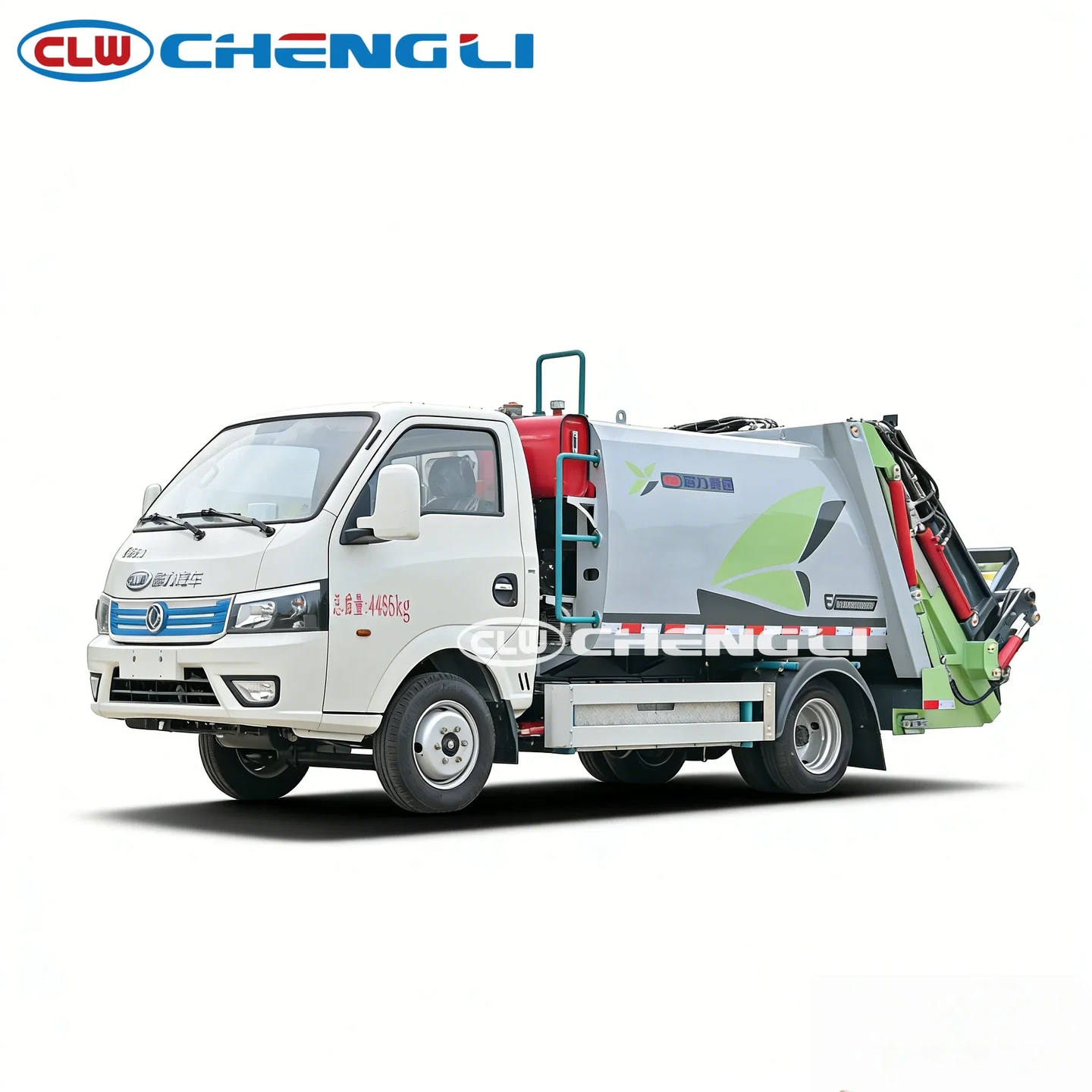
MEASURE THE BOTTLENECK. THEN THE WORKING MOVEMENT.
Compare the complete vehicle’s width, mirrors, height, wheelbase and overhangs with the actual route. Include gates, parked vehicles, ramps and overhead obstructions.
Bin lifting, body tipping and container exchange may extend beyond the travelling outline. Include the crew’s working area and the unloading movement, not only the parked truck.
Mark the narrowest passages, lowest obstructions, dead ends and places where traffic or parking changes access. Record slope and surface conditions.
Describe entry and exit paths and the turning area. Turning-circle data alone does not describe all body and mirror movements beside obstacles.
Show where bins stand, where the crew works and where waste is unloaded or handed to another vehicle. Include heights and alignment at that handover.
Balance access with usable waste payload and return trips. A smaller vehicle may require more unloading cycles; use measured quantities and cycle times.
Select the information you can include. Download the checklist, or carry your selected items and notes into the existing enquiry form.
Select an item or add a note to continue.
No. Compare the selected build’s complete dimensions and movements with measured access, turning and working space. “Mini” does not define a universal size.
Also include mirrors, height, wheelbase, overhangs and the manoeuvre. Check the separate space needed for loading and unloading.
Provide a measured site sketch, photographs of limiting points and the bin or receiving-equipment drawing. State the intended route and waste quantity.
Send CLW your waste stream, collection method, vehicle quantity and destination. Include existing equipment drawings where an interface must be retained.
Discuss this truck configuration