
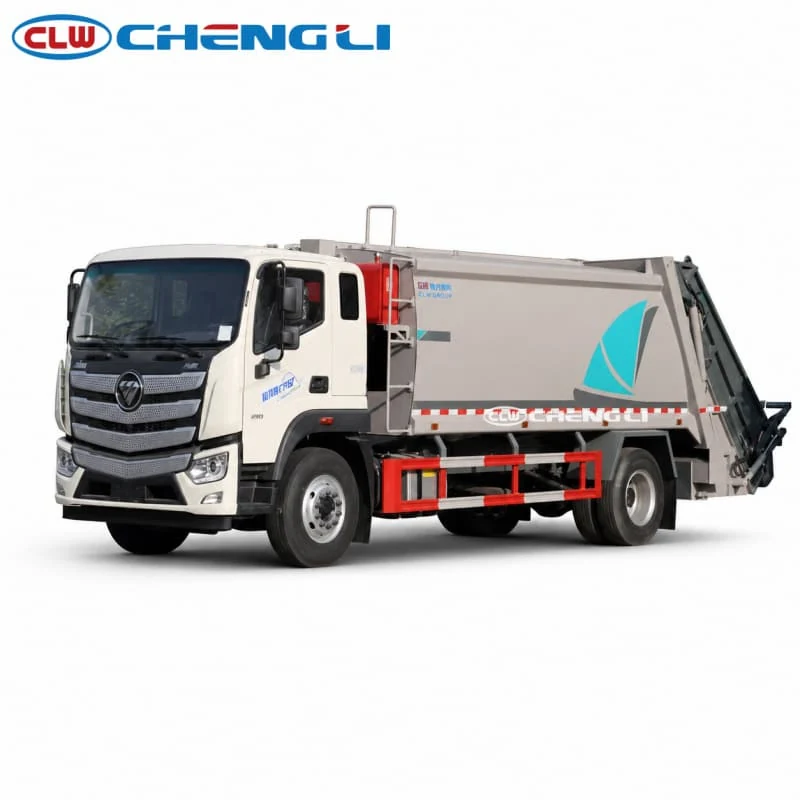
The Foton choice in this guide is between a small collection vehicle and a much larger rear-loader configuration. CLW Waste currently lists a Foton 4.495 t GVW mini compactor, a Forland 5 m³ mini compactor and an Auman 18 m³ rear loader. All three are listed as diesel 4×2 trucks, but their body information, gross-mass class, payload figures and route envelope are different.
Forland and Auman offer different vehicle sizes and collection-body configurations. Compare the mini models with the Auman using complete dimensions, permitted load, bin handling and the operating space available on your route.
Prices are in USD per vehicle. Compare the exact configuration, quantity, destination and commercial terms, including freight, duties, options, inspection and support scope. On small screens, swipe the comparison tables horizontally.
1. Foton garbage-truck models and reference prices
| Linked product | Listed body volume | GVW | Power source | Reference price per vehicle |
|---|---|---|---|---|
| Foton 4.495 t GVW Mini Garbage Compactor — CLW5088CLA-F | 4,495 kg | Diesel | USD 21,500–22,900 | |
| Foton Forland 5 m³ Mini Garbage Compactor | 5 m³ | 4,495 kg | Diesel | USD 17,000–18,500 |
| Foton Auman 18 m³ Rear Loader Compactor | 18 m³ | 18,000 kg | Diesel | USD 42,000–48,000 |
The Forland and Foton CLW5088CLA-F mini configurations share a 4,495 kg GVW and the same overall dimensions, but have different wheelbases and price ranges. The Auman belongs to a larger vehicle class. Compare the complete equipment and route role of each option.
2. Foton parameters side by side
| Specification | 4.495 t mini, CLW5088CLA-F | Forland 5 m³ mini | Auman 18 m³ rear loader |
|---|---|---|---|
| Product detail | Foton mini compactor | Forland 5 m³ compactor | Auman 18 m³ compactor |
| Listed body volume | 5 m³ | 18 m³ | |
| GVW | 4,495 kg | 4,495 kg | 18,000 kg |
| Listed rated payload | 400 kg | 400 kg | 10,000 kg |
| Listed curb mass | 3,965 kg | ||
| Overall length × width × height | 5,995 × 2,090 × 2,450 mm | 5,995 × 2,090 × 2,450 mm | 9,600 × 2,550 × 3,400 mm |
| Wheelbase | 2,850 mm | 2,800 mm | 5,150 mm |
| Drive / fuel | 4×2 / diesel | 4×2 / diesel | 4×2 / diesel |
| Published power detail | 115 HP | 115–149 HP options | |
| Published bin interface | Confirm equipment | Confirm equipment | 120 / 240 / 660 L |
| Reference price | USD 21,500–22,900 | USD 17,000–18,500 | USD 42,000–48,000 |
Use the payload rating together with the complete operating-mass schedule. Account for occupants, body equipment and accessories, and check axle limits. Where engine or body options are offered, identify the selected equipment in the quotation and order drawings.
Read the weight and axle-load guide before treating the gross rating or a simple subtraction as the permitted waste load.
3. Foton CLW5088CLA-F: a mini configuration with a published 400 kg payload
The Foton 4.495 t GVW mini compactor, CLW5088CLA-F measures 5,995 × 2,090 × 2,450 mm, with a 2,850 mm wheelbase and 115 HP. Assess this compact envelope against collection-point access, bin handling and the complete vehicle’s permitted waste load.
This configuration has a 400 kg rated payload. That deserves attention when budgeting daily collection: 4,495 kg is the whole vehicle's GVW, not 4.495 tonnes of waste. Request the exact completed vehicle's mass documents and working configuration, and plan trips around the permitted load and measured waste density. A compact body can have unused volume when a mass limit is reached first.
Its reference range is USD 21,500–22,900. Include the required bin lifter, working side, control arrangement and destination specification when asking for an offer. The listed 17–25 second loading-cycle figure concerns an equipment operation; it is not a guaranteed time to park, present a bin, empty it and leave the location.
4. Forland 5 m³ mini compactor: named volume, the same stated gross-mass class
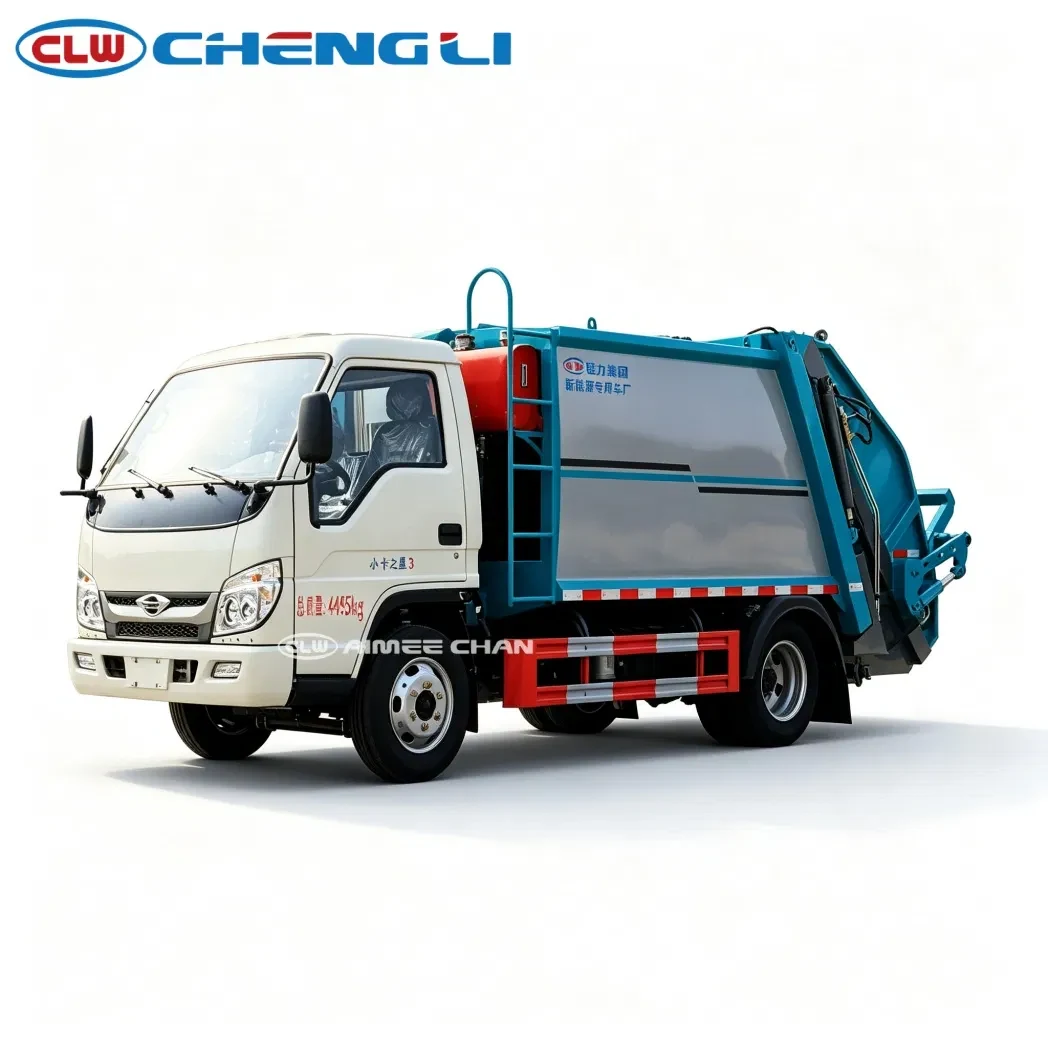
The Forland 5 m³ mini compactor gives a named 5 m³ body volume, 4,495 kg GVW, 3,965 kg curb mass and 400 kg rated payload. Its listed dimensions match the CLW5088CLA-F mini configuration at 5,995 × 2,090 × 2,450 mm, while the wheelbase is given as 2,800 mm rather than 2,850 mm. The stated engine choices span 115–149 HP; the quotation should identify the exact engine and equipment supplied.
For the two mini configurations, compare the wheelbase, body, bin lifter, engine and complete mass schedule together. Specify the selected equipment and delivery scope in each quotation so that a price comparison covers equivalent requirements.
The Forland price range is USD 17,000–18,500, below the USD 21,500–22,900 range for the Foton CLW5088CLA-F mini. Compare body material, volume, bin interface, controls, engine and delivery scope before choosing between the offers.
Why a 5 m³ body and 400 kg payload cannot be treated as five tonnes
Illustrative mass check: filling 5 m³ with material at an assumed measured density of 0.20 t/m³ corresponds to 1,000 kg of waste. That is above the listing's 400 kg payload figure, before resolving the complete operating-mass basis. The example does not establish the density of your refuse or a new rating for this truck; it shows why a fleet plan cannot multiply nominal volume by trips while ignoring mass.
For a lighter, volume-limited stream the body may be useful differently, but the operation still needs actual weighing and a permitted load plan. Compaction changes the relationship between volume and mass; it does not remove the vehicle or axle limits. Verify the selected bin and body equipment as well, since they contribute to the completed build.
5. Auman 18 m³ rear loader: a different route and infrastructure question
The Foton Auman 18 m³ rear loader has an 18,000 kg GVW, a 10,000 kg rated payload, a 5,150 mm wheelbase and dimensions of 9,600 × 2,550 × 3,400 mm. For the chosen equipment, check operating mass and axle distribution before planning the waste load per trip.
Use the vehicle dimensions guide to turn the dimensional differences into checks for gates, turns and the complete loading movement.
Compared with the listed Forland, the Auman is 3,605 mm longer, 460 mm wider and 950 mm higher, with a 2,350 mm longer wheelbase. Those are substantial differences to map against turning space, parked vehicles, overhead restrictions, loading movements and the receiving site. They do not by themselves provide a turning-radius guarantee.
The Auman's 18 m³ body has 3.6 times the nominal volume of the Forland's 5 m³ body. That is not 3.6 times the daily collection output. The number and spacing of stops, permitted mass, crew method, disposal distance and shift time determine whether the larger vehicle can use that space effectively. Its suitability must be assessed in a different mass and access envelope.
The published reference interval is USD 42,000–48,000. This configuration offers 120, 240 and 660 L bin interfaces and gives loading/discharge cycle figures. Confirm the actual pickup geometry and loaded bin mass rather than relying on bin volume alone. Include hopper access, the tailgate opening and the full discharge movement in the vehicle brief.
6. Which Foton configuration fits the route?
| Route situation | Starting comparison | What can change the decision |
|---|---|---|
| Collection points with measured access restrictions | Foton mini and Forland 5 m³ | Vehicle movement, permitted load, stop layout and unload travel |
| A route limited by body volume on suitable roads | Forland and Auman 18 m³ | Measured waste density, usable payload and trips actually completed |
| Large communal bins at established stops | Auman with listed 120 / 240 / 660 L interface | Exact pickup, loaded bin mass, presentation space and crew workflow |
| A tender with a strict waste payload requirement | The exact configured vehicle, with its mass evidence | Published body volume alone cannot establish compliance |
| A fleet combining access and transfer tasks | More than one documented vehicle size or route role | Transfer-site interface, handling time and total daily cost |
For access-constrained rounds, use the mini dimensions as a starting measurement, then check the complete loading and exit movement. Include disposal travel in the daily cycle. An accessible truck may need too many returns if the permitted load is small for the route's waste stream.
For a larger established collection round, examine the Auman where roads, bin presentation and discharge facilities can accommodate it. Record whether the current bottleneck is volume, mass or time. A larger body cannot solve a slow receiving queue, an incompatible bin interface or a road it cannot use.
For mixed routes, a combination of vehicle roles can be worth calculating, but a mini truck and a large rear loader do not automatically form a transfer system. Define where material is moved between vehicles or facilities, whether the equipment is compatible and how much handling and waiting time is added.
7. Keep volume, payload and collection cycles as separate numbers
Begin with daily measured waste mass and volume. Determine the usable waste allowance of the completed vehicle, including axle distribution, and compare that with the material that fits in the usable body volume. The first limit reached sets the planned load. A model name containing a tonnage or cubic-metre number cannot replace those checks.
The capacity and compaction guide develops this calculation and explains why a compaction ratio cannot increase the vehicle’s mass allowance.
Then calculate the whole working cycle: driving to the first stop, positioning, bin handling, packing, travel between stops, driving to unload, waiting, discharge and return travel. Published hydraulic cycle seconds describe one part of that process. They should not be multiplied into an assumed number of full collection stops without accounting for the other work.
Use the same definition of a shift, crew, disposal distance and receiving conditions for the three alternatives. A small vehicle that completes more trips may still spend more time travelling; a larger vehicle may carry spare volume if time or access governs. Base the fleet quantity on the route results rather than on a volume ratio alone.
8. Compare the complete purchase and operating cost
| Item | Why it matters to the comparison |
|---|---|
| Chassis and mass class | Confirm exact chassis, wheelbase, GVW, axle limits and configured load allowance |
| Body scope | Identify nominal/usable volume, material, hopper, lifting system and discharge equipment |
| Engine and driving position | Select the actual engine, destination specification and LHD/RHD build requirement |
| Bins and controls | Specify pickup geometry, loaded masses, operating side and included controls |
| Commercial terms | Hold quantity, currency, trade term, inspection, freight and tax treatment consistent |
| Operating cost | Use route-based fuel, labour, tyres, maintenance and unloading travel assumptions |
| Delivery and support | Identify batches, training, documents and the initial spare-parts scope |
CLW offers quantity-based pricing and staged delivery for larger fleets. Request the unit price for your order quantity and define the included equipment, freight, destination requirements and delivery batches.
Compare operating costs for the same collection task and period. Include fuel, staff, maintenance, tyres, disposal travel and vehicle utilisation, using measured or agreed assumptions. The preferred vehicle is the one that meets the route and equipment requirements within that operating plan.
9. Prepare a product-specific Foton enquiry
- Choose the starting listing: identify the generic 4.495 t mini, the Forland 5 m³ or the Auman 18 m³ using its product link.
- Describe the waste: daily mass and volume, density measurements where available, collection frequency and contaminants.
- Describe the bins: capacities, photographs, pickup geometry, dimensions and maximum loaded masses.
- Show the route: access width, height limits, tight turns, gradients, loading locations and disposal site.
- State required ratings: usable waste payload, volume, driving position and destination specification.
- Define the commercial scope: quantity, included equipment, inspection, transport term, delivery batches, training and spares.
Use the product links in the comparison tables to identify the proposed builds, then request a configuration quotation. The chassis comparison library brings the brand comparisons together.
Questions buyers ask
Which Foton garbage-truck configurations are compared?
The Foton 4.495 t GVW mini compactor CLW5088CLA-F, the Forland 5 m³ mini compactor and the Auman 18 m³ rear loader. All three use diesel propulsion and a 4×2 layout.
What are the Foton price ranges?
Per vehicle: USD 21,500–22,900 for the Foton CLW5088CLA-F mini, USD 17,000–18,500 for the Forland 5 m³ and USD 42,000–48,000 for the Auman 18 m³. The quotation defines exact configuration, quantity and commercial scope.
Does a 4.495 t GVW Foton mini carry 4.495 tonnes of refuse?
No. Both mini configurations have a 400 kg rated payload. GVW covers the complete vehicle and its load. Check operating mass and axle limits for the final equipment; the 5 m³ body volume is a separate volume figure.
Are the two Foton mini listings the same truck?
Their overall dimensions and GVW match, while their wheelbases and price ranges differ. Compare each complete body, engine, bin lifter, mass schedule and delivery scope in the quotation.
How much larger is the Auman than the Forland?
The listed Auman is 3,605 mm longer, 460 mm wider and 950 mm higher. Its nominal body volume is 18 m³ rather than 5 m³. Those differences do not establish the same ratio of useful payload or daily productivity.
Which bin sizes can be specified for the Auman?
The Auman offers 120, 240 and 660 L bin interfaces. Match the pickup geometry, bin dimensions, loaded bin mass and selected lifter equipment; equal nominal bin volume alone does not establish compatibility.