
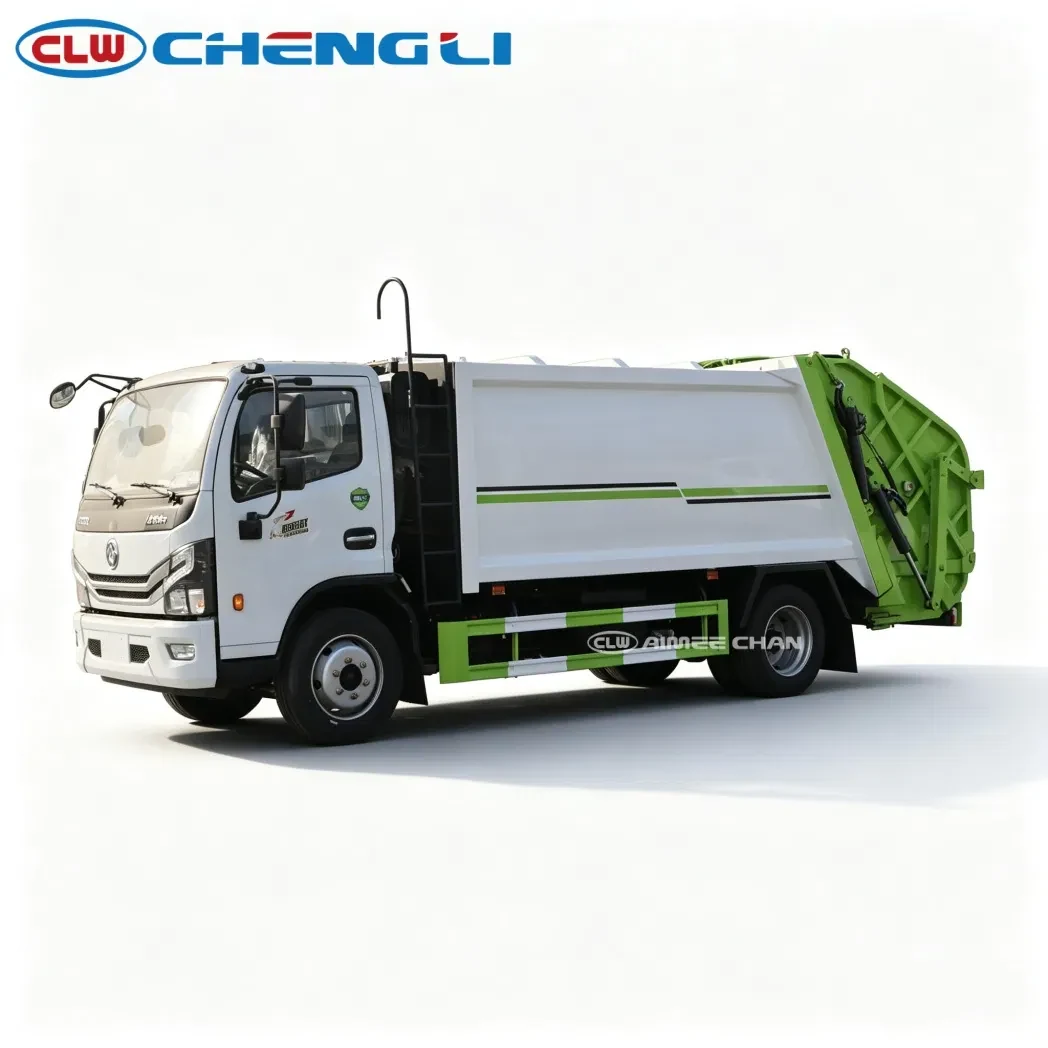
Choose the collection system first, then size the Dongfeng chassis and body around the route. A rear-loader compactor collects and compresses waste at many stops. A hook lift exchanges compatible containers. A food-waste truck collects a separate wet waste stream, while a docking truck works with a transfer-station interface. These vehicles can share a chassis brand and still perform fundamentally different jobs.
Compare Dongfeng configurations by collection method, complete vehicle dimensions, axle limits and body equipment. Use the product links to inspect each model and its photographs before requesting a quotation.
Prices are in USD per vehicle. Your written quotation should specify configuration, quantity, destination, included containers, freight, taxes, inspection and delivery terms.
1. Which Dongfeng garbage-truck type fits the work?
| Collection task | Vehicle type to investigate | Main selection check |
|---|---|---|
| Repeated household or commercial bin collection | Rear-loader or side-loader compactor | Bin pickup, loaded bin mass, stop layout and usable waste payload |
| Narrow-street rounds with small collection points | Mini compactor or compact self-loader | Complete vehicle width, turning movements and unloading travel |
| Boxes left at collection points and exchanged later | Hook lift / detachable-container carrier | Hook height, rails, rollers, locks and loaded box mass |
| Separated restaurant and canteen waste | Food-waste collection truck | Liquid containment, bin lifter, cleaning arrangement and receiving facility |
| Waste loaded at a transfer station | Docking truck | Station interface, opening height and discharge arrangement |
| Cleaning containers after waste collection | Bin washer | Bin geometry, water demand, wastewater recovery and daily wash schedule |
| Green waste or tipping operations | Task-specific shredder or refuse dump truck | Accepted material and loading/discharge process |
The practical question is where the truck receives waste and what it must do before leaving. A carrier that exchanges a loaded box solves a different bottleneck from a compactor waiting for bins at every address. Map that process before comparing cubic metres or purchase prices.
To place these vehicle roles in the whole operation, review the collection and transfer workflow before selecting a collection or transfer configuration.
2. Dongfeng compactors: mini, medium and heavier configurations
Rear loaders suit routes where waste is brought to a rear hopper and compacted into a fixed body. The useful comparison is the complete operating cycle: positioning, bin handling, packing, travelling to the next stop and eventual discharge. A larger body may reduce unloading trips, but only if the permitted payload, road access and available shift time support the additional material.
| Linked product | Body/container volume | GVW | Power source | Reference price per vehicle |
|---|---|---|---|---|
| Dongfeng Tuyi 3.5 m³ Mini Garbage Compactor | 3.5 m³ | 4,495 kg | Diesel | USD 19,800–23,500 |
| Dongfeng 6 m³ Rear Loader Compactor Truck | 6 m³ | 7,360 kg | Diesel | USD 25,000–28,000 |
| Dongfeng Dolica 8–9 m³ Rear Loader Compactor | 8–9 m³ | 11,995 kg | Diesel | USD 25,000–30,000 |
| Dongfeng 12 m³ Rear-Loader Compactor Truck | 12 m³ | Diesel | USD 28,000–32,000 | |
| Dongfeng 9.5 m³ Electric Garbage Compactor | 9.5 m³ | 11,995 kg | Electric | USD 21,000–27,000 |
| Dongfeng 13 m³ Electric Garbage Compactor | 13 m³ | 16,200 kg | Electric | USD 25,000–33,000 |
| Dongfeng 18 t GVW Rear-Loader Compactor Truck — CL 80 ZY | 18,000 kg | Diesel | USD 70,000–100,000 | |
| Dongfeng 25 t GVW Rear-Loader Compactor Truck — CL 50 ZY | 25,000 kg | Diesel | USD 60,000–90,000 |
Mini versus mid-size: compare the route envelope
The Dongfeng Tuyi 3.5 m³ mini compactor lists dimensions of 5,995 × 1,960 × 2,200 mm and a 4,495 kg GVW. It is a starting point for measured narrow-route assessments. Compare the cab, mirrors, parked vehicles and loading area as well as the body. A vehicle that can enter a street still needs space to position, load and exit.
The 6 m³ rear-loader lists 6,580 × 2,100 × 2,900 mm and a 7,360 kg GVW. The Dolica 8–9 m³ rear-loader lists 7,720 × 2,320 × 2,880 mm and an 11,995 kg GVW. Those are changes in the vehicle envelope and mass class, not just changes in box size. The Dolica configuration also has a 5,135 kg payload; this figure must remain tied to its particular configuration and operating-mass basis.
The 12 m³ rear loader measures 7,500 × 2,360 × 3,000 mm. Compare this complete envelope with route access, then specify the configured vehicle and axle limits for the intended waste load.
Diesel versus electric: compare the duty plan and quotation scope
The 9.5 m³ electric compactor lists a 165 kWh battery and an 11,995 kg GVW. The 13 m³ electric compactor lists 240 kWh and a 16,200 kg GVW. Battery energy is an input to the route plan; it is not a promise of a fixed daily distance or number of collection rounds.
Include loaded travel, stop frequency, hydraulic work, gradients, ambient conditions and charging windows in an electric-vehicle enquiry. For diesel, include fuel specification, maintenance support and the same loaded duty. The reference ranges in the table are separate configurations with different configurations. Their overlap does not establish that one propulsion type is always cheaper to buy or operate.
The CL 80 ZY has an 18,000 kg GVW; the CL 50 ZY has a 25,000 kg GVW and a 6×4 layout. Compare axle distribution, body configuration and unloading-site access. GVW describes the complete vehicle and load, rather than body volume or waste payload.
3. Hook lifts: collect containers rather than individual bins
| Linked product | Body/container volume | GVW | Power source | Reference price per vehicle |
|---|---|---|---|---|
| Dongfeng 4.5 t Detachable-Container Hook Lift | 4,495 kg | Diesel | USD 17,000–29,000 | |
| Dongfeng 18 t Medium Hook Lift Truck | 18,000 kg | Diesel | USD 30,000–45,000 | |
| 25 t Electric Roll-Off Truck, 218.8 kWh | 18–20 m³ | 25,000 kg | Electric | USD 69,000–78,000 |
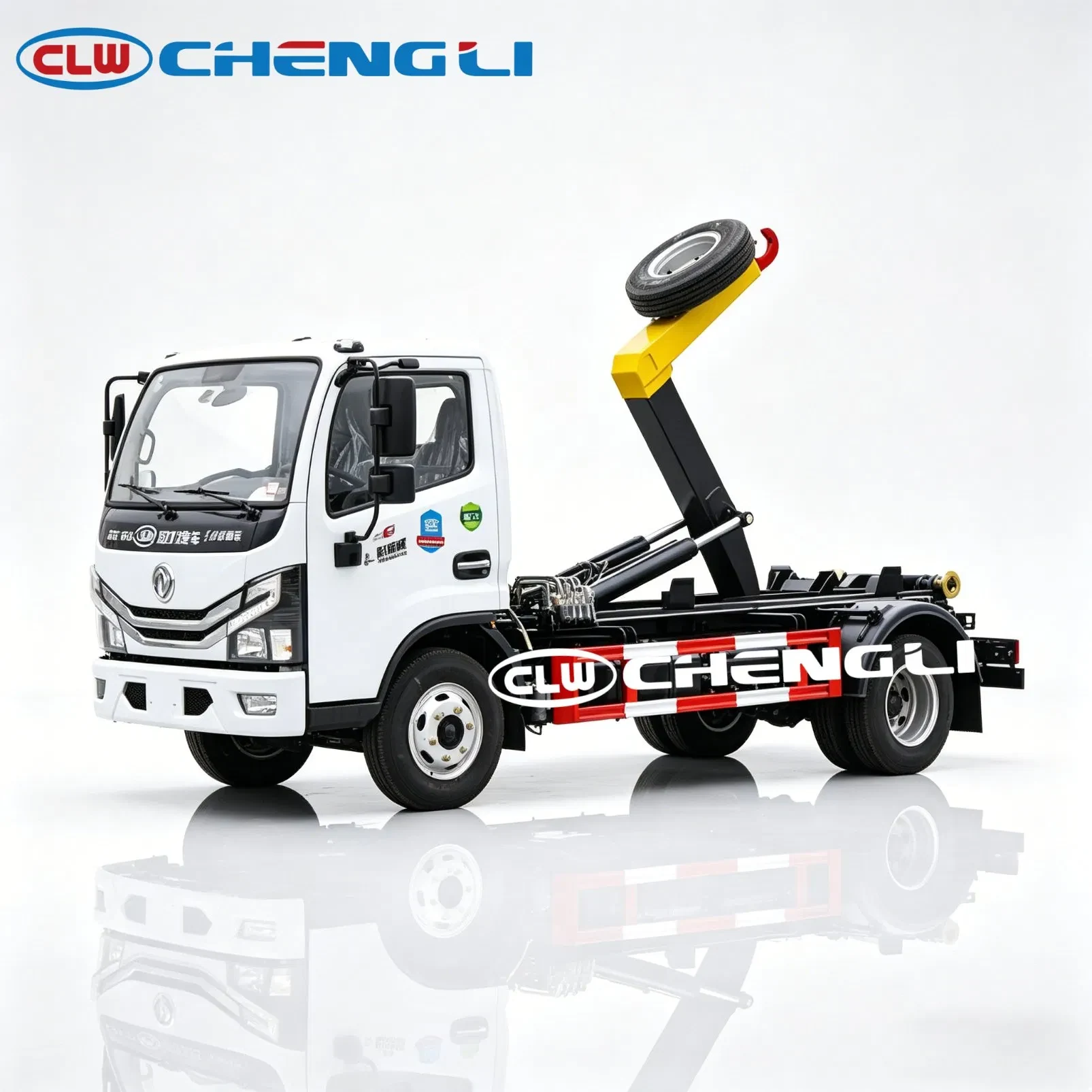
A hook lift is useful when a container can remain at a collection point while the truck serves other sites. Route output then depends on box availability, exchange time, loaded travel and unloading arrangements. It is not determined by the carrier alone. Include the empty replacement container and its positioning in the operating plan.
The roll-off and hook-lift comparison explains why the lifting mechanism and container interface must be identified separately from a general truck name.
The 4.5 t-class detachable-container carrier lists a 4,495 kg GVW and dimensions of 5,620 × 1,750 × 2,300 mm. The 4.5 t description is a gross-mass class, not 4.5 tonnes of waste payload or a universal hook-lifting rating. Confirm the carrier, empty box, contents and equipment as one load case.
The 18 t medium hook lift offers several listed chassis lengths and wheelbases. Choose the box length and overhang together with the carrier configuration. A container that can be pulled onto the rails may still create an unacceptable axle-load distribution or exceed the locking and body-position requirements.
The 25 t electric roll-off configuration lists 218.8 kWh battery energy, a 6×2 layout and an 18–20 m³ compatible-container volume. Its reference price is higher than the compact carrier's, but it also represents a different mass class and propulsion arrangement. Compare it with a documented container-transfer duty, including depot electrical capacity, charging time and the number of spare boxes.
For any of these vehicles, send the container drawing, hook pickup height, rail arrangement, rear rollers, locks, empty mass and maximum planned loaded mass. Keep hook lifting capability, permitted transport load and box volume as three separate checks.
4. Food-waste trucks: separate wet collection from general refuse
| Linked product | Body/container volume | GVW | Power source | Reference price per vehicle |
|---|---|---|---|---|
| Dongfeng D6 5 m³ Food Waste Truck | 5 m³ | 7,360 kg | Diesel | USD 15,000–20,000 |
| Dongfeng 8 / 10 m³ Food Waste Collection Truck — CL5181TCACC6 | 8 / 10 m³ | Diesel | USD 15,000–20,000 | |
| Dongfeng 10 m³ Food Waste Collection Truck — CLW5160TCA6 | 10 m³ | Diesel | USD 15,000–20,000 |
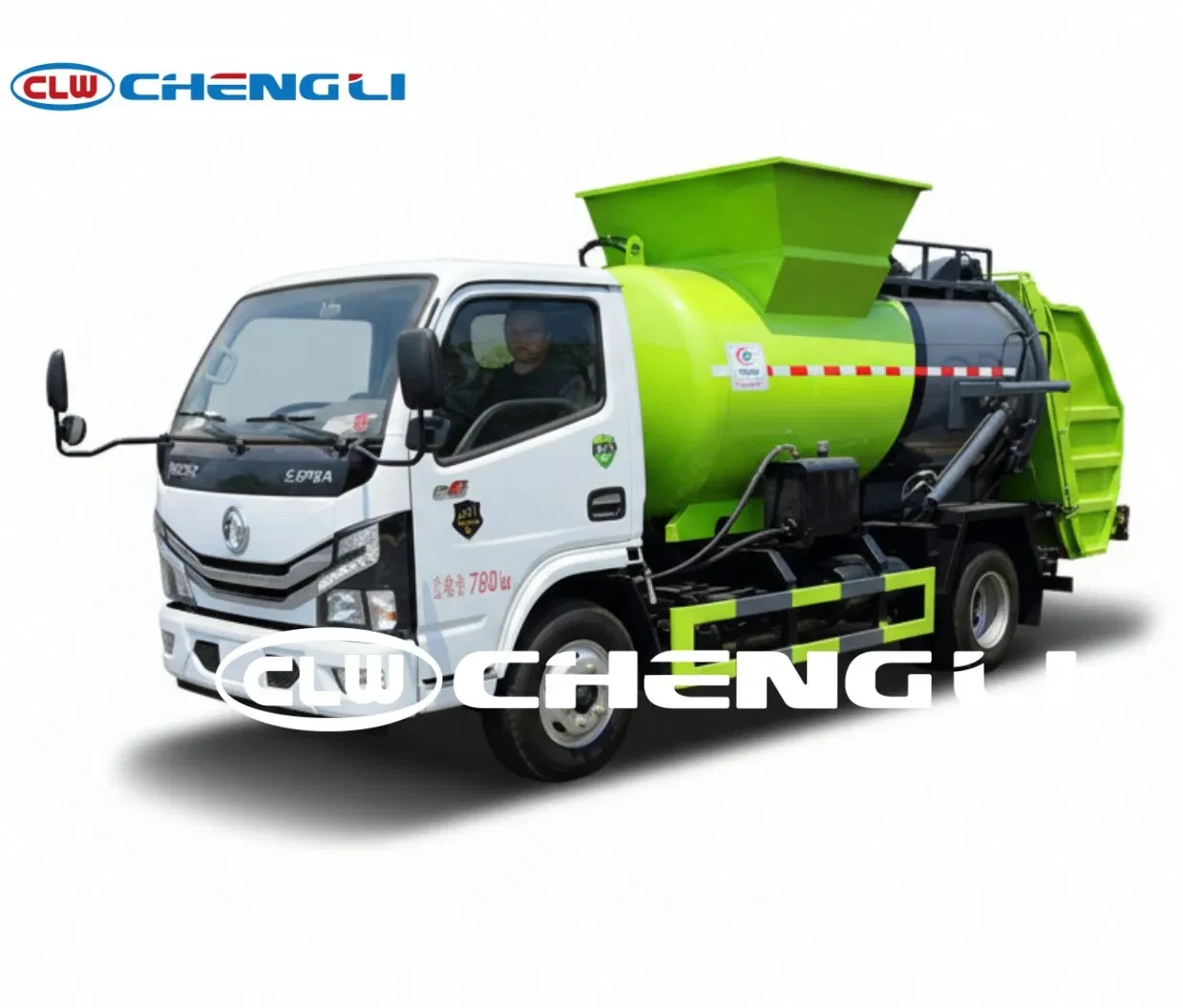
Restaurant and canteen waste needs a receiving process designed for the actual material. Ask how bins are lifted, how liquid is contained, how the body is emptied and how the equipment is washed. A conventional refuse compactor should not be assumed to provide the same containment and discharge arrangement as a food-waste tank.
The D6 5 m³ food-waste truck lists a 240 L bin interface, a 7,360 kg GVW and a 2,880 kg payload. The 5 m³ tank volume is a spatial limit; wet waste can reach a mass limit before filling all available space. Use measured waste mass and composition when planning collection quantities.
The CL5181TCACC6 8/10 m³ configuration and CLW5160TCA6 10 m³ configuration are separate configurations. They share a listed price interval, but that does not make them identical. Their drive layouts are listed as 4×2 and 6×2 respectively, and their body and equipment descriptions differ. The 10 m³ configuration also has a 450 L clean-water tank and 700 L wastewater tank; those figures should not be transferred to the other model without confirmation.
State the number and size of bins, collection frequency, likely liquid content, receiving-facility requirements and cleaning-water availability. If stainless steel, an alternative control system or a particular rear-cover locking arrangement is required, include it explicitly in the quotation scope.
5. Side loading and self-loading: match the pickup to the street
| Linked product | Body/container volume | GVW | Power source | Reference price per vehicle |
|---|---|---|---|---|
| Dongfeng 8 m³ Side-Loading Garbage Truck | 8 m³ | 9,100 kg | Electric | USD 17,000–23,000 |
| Dongfeng Dolica Side-Bucket Loading Garbage Truck | 7,360 kg | Electric | USD 15,000–19,000 | |
| Dongfeng Self-Loading Garbage Truck, 1,970 mm Wide | Diesel | USD 20,000–38,000 |
The 8 m³ side-loader and Dolica side-bucket loader list electric propulsion and 120/240/660 L bin interfaces. Bin capacity alone does not establish compatibility: provide the actual pickup profile, lid arrangement, dimensions and loaded mass. Include the working side and the clearance between the truck, kerb, street furniture and parked vehicles.
The 1,970 mm-wide self-loader uses diesel propulsion and has several length options. Compare its complete dimensions, bin handling and operating mass with the electric side loaders, then select the configuration that fits the route.
A side-lifting arrangement can be useful where bins are consistently presented on the designated working side. A rear-loading workflow may be easier to organise where presentation varies, but the result depends on the specific equipment, crew method and street layout. Define the route procedure before selecting the lifter.
6. Docking vehicles and specialist trucks
| Linked product | Body/container volume | GVW | Power source | Reference price per vehicle |
|---|---|---|---|---|
| Dongfeng 18 m³ Docking Garbage Truck, 154 kWh | 18 m³ | 18,000 kg | Electric | USD 27,000–33,000 |
| Dongfeng Tianjin 15 m³ Electric Docking Refuse Truck | 15 m³ | Electric | USD 75,000–90,000 | |
| 7.3 t Bin Washer, 2,500 L Clean-Water Tank | 7,360 kg | Diesel | USD 8,000–27,000 | |
| Dongfeng 11.995 t GVW Waste Collection Dump Truck — 20 JD6 | 11,995 kg | Diesel | USD 45,000–80,000 | |
| Dongfeng 14.06 t GVW Garden Waste Shredder Truck | 14,060 kg | Diesel | USD 19,000–27,000 |
Docking trucks need station drawings
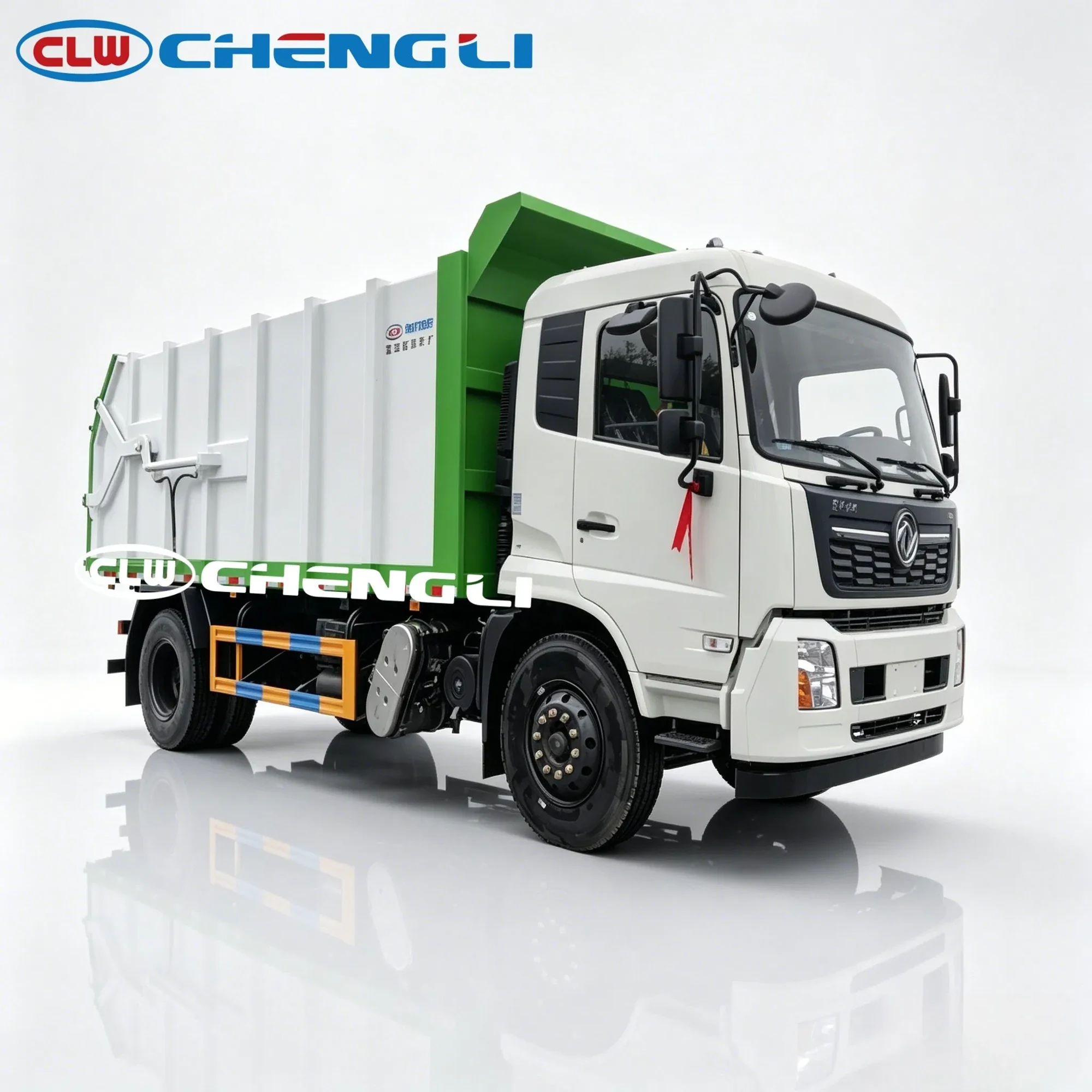
The 18 m³ docking truck lists a 154 kWh battery, while the Tianjin 15 m³ docking truck lists 210 kWh. The larger battery does not mean a larger waste body, and the larger body does not automatically mean a larger permitted waste load. These two configurations also have substantially different reference price intervals, making a matched specification essential before drawing a cost conclusion.
Request station opening dimensions, docking height, sealing details, push-plate clearance, vehicle positioning and discharge geometry. Plan how a full truck leaves while the next vehicle enters. A station vehicle should not be selected solely from the volume printed in its name.
Washing, tipping and shredding solve separate tasks
The 7.3 t bin washer lists a 2,500 L clean-water tank, high-pressure washing and separate clean-water/wastewater handling. That tank capacity is not a garbage-carrying capacity. Determine water use per bin under the proposed wash process, refill opportunities and wastewater disposal before estimating daily output.
The 11.995 t GVW waste-collection dump truck uses hydraulic tipping for discharge. Verify how waste is loaded, contained during travel and discharged at the receiving point. Its GVW must not be described as the mass of waste it can carry.
The garden-waste shredder truck serves green-waste processing. Specify the feed material, branch sizes, required throughput and handling of mixed material so the processing equipment can be selected for the task.
7. Same Dongfeng brand, and even the same chassis code, still require a body-specific check
The D6 food-waste truck and bin washer use chassis designation EQ1075SJ3CDF, with wheelbases of 3,308 mm and 2,700 mm respectively. Their bodies perform different tasks. Specify the wheelbase, body, operating mass and equipment together in the order drawings.
A tank, compaction body, hook frame and washer change mounting, auxiliary power, plumbing, controls, centre of gravity and axle distribution. Common branding can simplify the starting shortlist, but compatibility and permitted masses belong to the complete build.
8. Check payload and route time before increasing body volume
Use two separate calculations. First, estimate the waste mass that fits within the usable volume at the measured density. Second, determine the allowed waste mass after accounting for the complete vehicle and its operating equipment. The lower limit governs the planned load; individual axle and body-system limits must also be met.
Use the capacity and compaction guide for a worked explanation of nominal volume, density and permitted waste mass when comparing these configurations.
Illustrative calculation: 8 m³ of usable space multiplied by an assumed measured waste density of 0.25 t/m³ gives 2 t of material. If the configured vehicle's permitted waste load were 3 t, volume would be the first constraint in that example. If the permitted waste load were 1.5 t, the mass limit would be reached sooner. These are example inputs, not ratings for a product above, and a general compaction-ratio claim cannot replace a route measurement.
Next, add collection stops, loaded travel, queuing, discharge, return travel and charging or refuelling. Four theoretical loads per shift are not achievable if the disposal trip and station queue consume the available hours. Compare the complete daily cycle using the same assumptions for each candidate truck.
9. How to compare the price ranges fairly
| Quotation item | What to specify |
|---|---|
| Vehicle identity | Exact chassis, wheelbase, axle arrangement, driving position and destination specification |
| Collection equipment | Body volume, lifting interface, hydraulic/control system and included options |
| Mass basis | Configured curb mass, permitted gross/axle masses and usable waste/container payload |
| Containers and bins | Included quantity, dimensions, tare mass and interface drawings |
| Energy equipment | Battery and charging scope for electric builds; fuel and engine configuration for diesel builds |
| Commercial scope | Currency, vehicle quantity, trade term, freight, taxes, inspection and quotation validity |
| Delivery and support | Production batches, agreed documents, training scope and initial spare-parts list |
Large differences in the tables are a reason to compare the underlying equipment and scope, not a reason to average the prices or assume that the least expensive configuration meets the same task. Ask for the same required configuration and fleet quantity in each offer. CLW's listed quantity-based pricing and phased-delivery options should be included in the written commercial proposal.
10. A practical Dongfeng shortlist by operating scenario
- Narrow neighbourhood rounds: start with the Tuyi mini compactor or compact self-loader, then check route width, loaded mass and discharge travel.
- Established municipal bin rounds: compare 6 m³, Dolica 8–9 m³ and 12 m³ rear loaders using the actual bin interface and full shift.
- Container exchange: compare compact, medium and electric hook lifts against existing box drawings, loaded box mass and exchange sites.
- Restaurants and canteens: compare the D6 and larger food-waste configurations around wet-waste mass, cleaning and the receiving process.
- Transfer stations: begin with the docking drawings and daily throughput; then select vehicle volume, mass class and propulsion.
- Container hygiene and green waste: assess the bin washer or shredder as dedicated fleet tasks rather than substitutes for every refuse truck.
11. Send a brief that leads to a comparable quotation
Include destination, vehicle quantity, driving position, waste type, daily mass and volume, route limits, collection-point photographs, bin or container drawings, loading/unloading procedure and intended shift length. For electric trucks, add depot supply, available charging windows and daily loaded travel. State the commercial term and which boxes, chargers, training and spare parts must be included.
Use the product links in the comparison tables to identify the proposed builds, then request a configuration quotation. The chassis comparison library brings the brand comparisons together.
Questions buyers ask
Are all Dongfeng garbage trucks built on the same chassis?
No. Dongfeng identifies the chassis brand or series. The trucks in this guide use different chassis classes, wheelbases, drive layouts, bodies and power sources. Match the exact chassis and complete body configuration to the job.
Which Dongfeng garbage-truck type should I compare for household bin collection?
Start with a rear-loader or side-loader configured for the actual bins and route. Compare a mini or compact vehicle where access is constrained. Check pickup geometry, loaded bin mass, usable waste payload and complete shift time.
Does a 4.5 t hook-lift description mean 4.5 tonnes of waste payload?
No. The compact carrier has a 4,495 kg GVW. Vehicle, container, waste, occupants and equipment must remain within the complete vehicle and axle limits. The hook mechanism has its own handling limits.
Why do Dongfeng garbage-truck prices overlap or vary widely?
They refer to separate product configurations and may represent different bodies, chassis classes, power sources and equipment. Use the USD ranges for an initial shortlist and request a matched written quotation covering quantity, destination, options and delivery scope.
Can a food-waste truck replace a bin washer or docking truck?
These are different working systems. A food-waste truck handles a separate wet waste stream; a washer cleans bins; a docking truck receives waste through a matched station interface. Select the process and interfaces before comparing volumes.
Are the electric trucks guaranteed to complete a fixed route from battery capacity alone?
No. Battery energy alone does not establish route range or shift output. Loaded travel, gradients, hydraulic work, ambient conditions, operating reserve and charging windows need to be included in the duty assessment.