
What is the difference between collection, transfer and disposal?
Collection is the movement from homes, businesses or shared containers into the collection system. Transfer is a possible intermediate stage where waste is moved from collection vehicles into other transport equipment. Treatment, recovery or disposal happens at an appropriate receiving facility. These functions belong to one operating chain, but buying a truck does not establish how the receiving facility processes the waste.
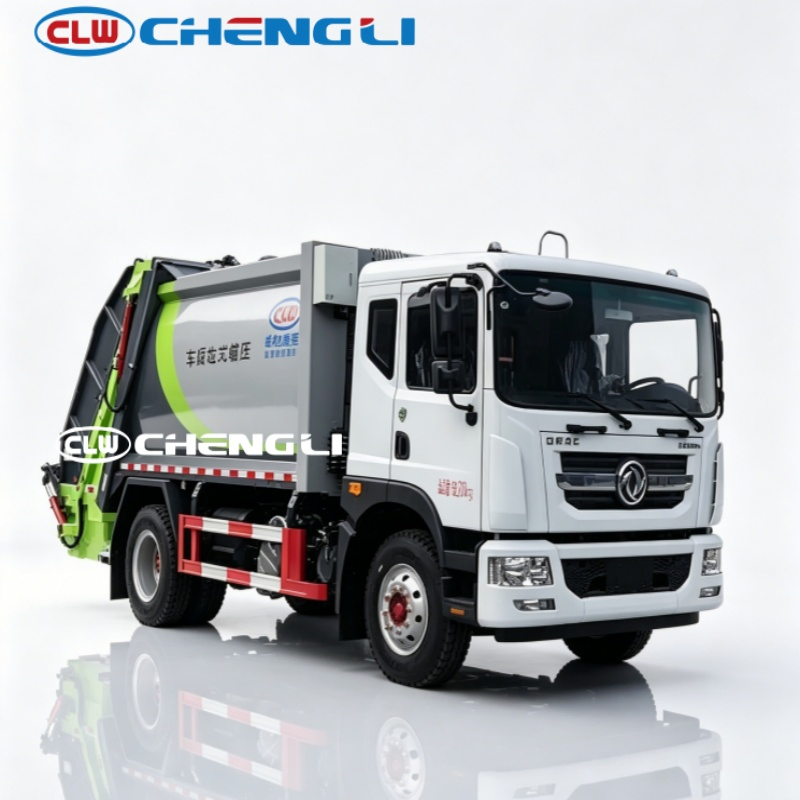
CLW focuses on garbage trucks and waste-collection vehicles. For a vehicle enquiry, describe the part of the chain you want the equipment to perform. A request for a waste disposal truck is clearer when it identifies whether the truck will empty bins, exchange loaded containers, unload into transfer equipment or carry a consolidated load onward.
Which vehicle belongs at each stage?
- Collection point: identify the waste and bin or container interface.
- Collection round: collect into the chosen body or transport the loaded container.
- Optional transfer: unload or exchange through a compatible station arrangement.
- Receiving facility: discharge the material accepted by the facility using its required unloading method.
| Stage | Possible vehicle role | Key purchasing information |
|---|---|---|
| Bin collection | A compactor or other suitable collection body receives the waste. | Bin interface, loading position, waste mass, route access and collection frequency. |
| Container collection | A hook lift or skip loader transports the loaded container. | Container drawing, empty and loaded masses, lifting points and securing arrangement. |
| Station handoff | A compatible vehicle unloads into or exchanges with the station system. | Docking geometry, discharge opening, working envelope and receiving sequence. |
| Onward transport | A suitable carrier moves the consolidated load. | Permitted mass, axle loads, containment, route and destination unloading method. |
This is a workflow comparison, not a universal list of equipment required by every city. Direct collection to a nearby receiving facility may be practical for one route. Another may benefit from transfer. Decide from the measured operation rather than adding a station simply because it appears in a standard diagram.
For published vehicle examples, the Dongfeng vehicle comparison covers collection and docking roles, while the JAC compactor and hook-lift comparison separates fixed-body collection from detachable-container exchange. Match the vehicle to its stage in the operation.
Why does the collection truck need its own specification?
A collection route involves repeated stops, loading movements and access to collection points. Specify the bins or containers actually used, the waste stream and the available working area. Include the intended load mass as well as body volume. The road condition, turning space and unloading arrangement can constrain the complete vehicle independently of the advertised container size.
The guide to garbage truck types helps distinguish collection mechanisms. A truck chosen to empty wheeled bins should not be assumed to exchange large detachable containers. Equally, a container carrier should not be described as a bin-emptying vehicle unless the specified equipment actually provides that function.
When can a transfer station improve the transport arrangement?
A transfer station can consolidate loads before a longer onward journey. The EPA's waste transfer station manual describes this intermediate role. The purchasing question is whether the proposed arrangement reduces the collection fleet's time away from its rounds enough to justify the station, handling and onward-transport requirements.
Use a transparent example rather than assuming a saving. Suppose three collection vehicles each bring 8 t to a station, and the selected onward vehicle can legally carry 24 t for the specified configuration. The combined mass is 3 × 8 = 24 t. That could replace three loaded long-distance movements with one for this batch. These are illustrative inputs, not CLW model ratings or a guaranteed threefold cost reduction.
The comparison still needs the approach distance, empty return, queue, transfer time, station cost and unloading cycle. If the onward vehicle reaches a volume or axle constraint before 24 t, the example no longer applies. Measure the complete cycle and compare both routes on the same basis. Use the transfer-station logistics page to organise the interface discussion.
What must match at the station handoff?
The collection vehicle and receiving equipment need a compatible physical arrangement. Request the station drawings, vehicle position, unloading opening and clearances with moving parts fully considered. Identify whether material is tipped, pushed into an interface or transported in a detachable container. Similar body volumes do not establish that two systems can connect.
Where the project requires a docking arrangement, discuss the docking garbage truck category against the actual station design. Where a detachable container is the agreed transport unit, compare the heavy hook lift range using its container and load requirements. These are alternative starting points, not a claim that one truck fits every transfer station.
How should recyclables and liquids be handled?
The receiving facility matters. Recyclable material may go to a sorting or processing operation rather than a landfill; the collection specification should reflect how that material must arrive. Ask whether separate streams must remain separate and whether compaction would interfere with the receiving process. Avoid treating every waste stream as interchangeable mixed refuse.
Liquid transport also needs its own specification. A solid-waste body is not automatically suitable for moving a separate liquid load. If the operating plan includes leachate transport, describe the liquid, collection connection, tank requirements and receiving arrangement when discussing a leachate transport vehicle. Do not infer a tank's suitability or destination acceptance from the vehicle name alone.
What route and LHD/RHD information belongs in the enquiry?
For each leg, record distance, gradients, road access, gates, turning areas, operating hours and expected waiting. State the required driving position and the intended working side. The RHD build guide and LHD/RHD country guide explain why steering position and equipment layout must be described together without assuming universal market approval.
Keep pedestrian areas and vehicle movements in the site plan. HSE's waste transport guidance emphasises reducing reversing and managing vehicle–pedestrian risks. The selected configuration and local operating procedures must be assessed for the actual site; the transport-chain diagram is not an instruction for carrying out a manoeuvre.
What should you send CLW for a vehicle proposal?
Send the destination country, vehicle quantities, collection points, waste stream, measured daily mass and volume, existing bin or container drawings, required driving position and chassis preference. Add the station interface, receiving facility's unloading conditions, specified emissions requirements and the route information for each transport leg. Say which stage each vehicle must perform.
Use the fleet planning guide to separate workload from available operating time. Then discuss your garbage truck requirements with CLW or email [email protected]. A complete transport brief helps compare the collection vehicle, any transfer equipment and the onward carrier as connected purchasing decisions.
Questions buyers ask
Is a waste disposal truck a separate universal vehicle type?
No. The phrase can refer broadly to waste transport. Identify the actual job: bin collection, container exchange, station handoff or onward transport to a receiving facility.
Does every collection route need a transfer station?
No. Compare the complete direct route with a transfer arrangement using distances, vehicle loads, handling time, queues and costs. A station is not automatically the best choice.
Does transfer always reduce transport cost?
No universal saving can be stated. Consolidating suitable loads can reduce loaded long-distance movements, but additional handling, facilities, waiting and empty travel must be included.
Can the same body carry solid waste and a separate leachate load?
Do not assume this. Define solid and liquid tasks separately and assess the selected containment, connection and unloading systems for each material.