
How should you use a list of garbage truck types?
A useful list helps turn an operating task into a vehicle enquiry. It should not imply that every label is a separate engineering class. A small electric rear loader, for example, belongs to the mini, electric and rear-loading descriptions at the same time. The ten configurations below reflect different buying decisions, including loading position, container handling, energy supply and waste stream.
First decide whether the truck must empty a bin into its own body or carry a loaded container away. Next describe the material, collection points and receiving facility. Only then compare chassis, capacity and additional equipment. This sequence avoids choosing an attractive body shape before checking whether it connects to the existing collection system.
1. What does a rear-loader compactor do?
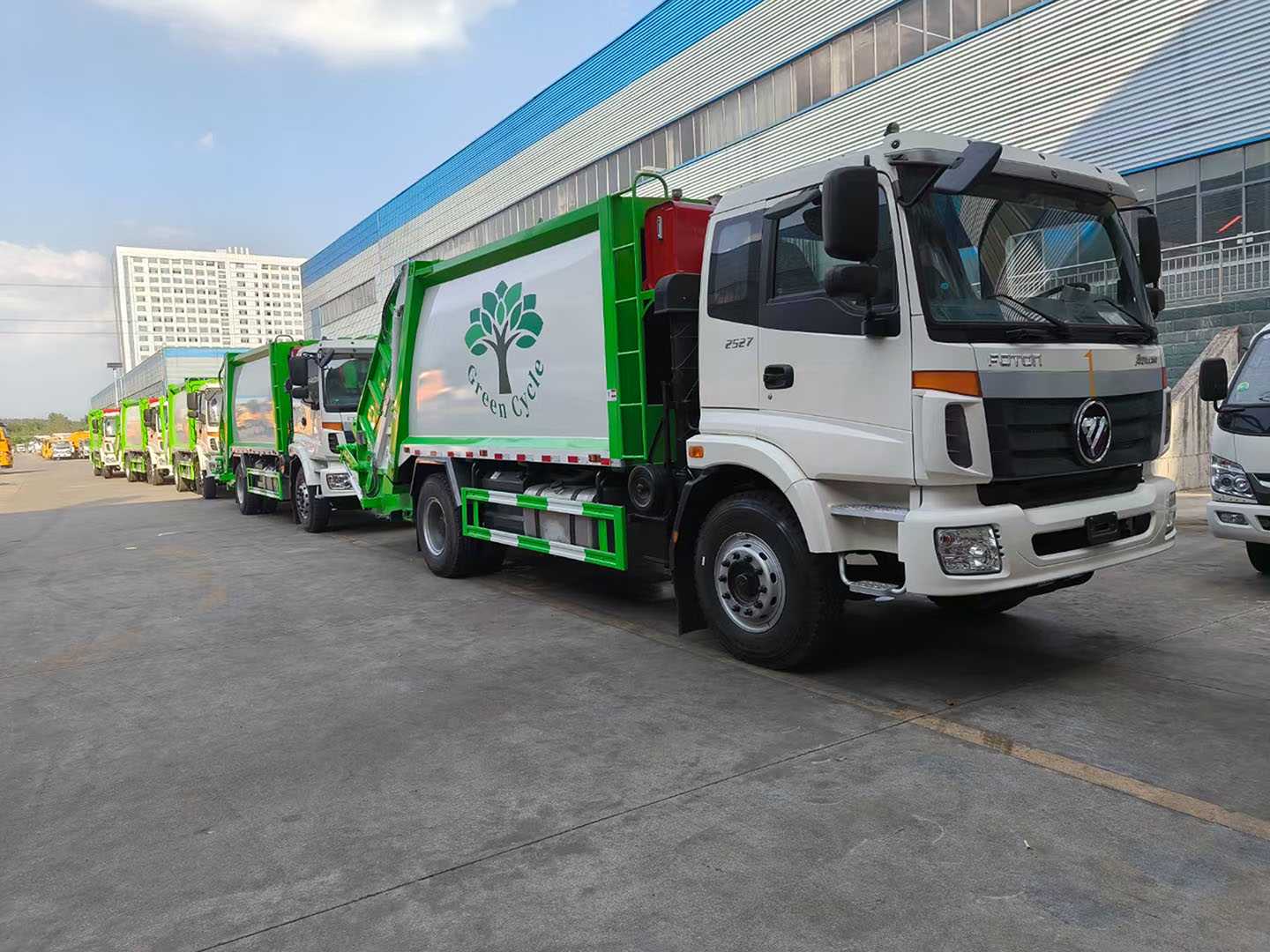
A rear loader receives waste through the rear loading area. In a compactor configuration, the working mechanism moves and compresses suitable material into the storage body. Depending on the specified equipment, waste may arrive from compatible bins or another agreed loading arrangement. The name rear loader does not establish that every bin size or pickup profile will fit.
For household or comparable collection tasks, describe the bin fleet, expected waste mass, loading space and unloading point. Review the CLW compactor truck range as complete chassis-and-body configurations. Body volume, working equipment and available waste payload need to be considered together.
2. How is a side loader different?
A side loader receives waste from the side of the vehicle. The mechanism may be configured around different levels of assistance or automation, so specify the actual operating arrangement. A side-loading label alone does not mean the truck can collect any bin automatically or from either side of the road.
Record the intended working side, bin presentation, obstacles and the room available for the loading movement. The rear loader and side loader comparison explains the route questions behind this choice. Compare the crew's tasks and access requirements instead of assuming a universal staffing or collection-speed advantage.
3. What do self-loading and bin-tipper descriptions mean?
These descriptions draw attention to the equipment that lifts or empties a bin. They must still be tied to a specific mechanism and body. A powered lifter does not make all handling automatic, and the same nominal bin volume can be supplied with different pickup profiles, heights and loaded masses.
Provide drawings and photographs of each bin family that must remain in service. Describe how bins reach the collection point and what the crew must do before and after lifting. Ask for the specified interface and working sequence, rather than treating self-loading as a promise of compatibility or unattended operation.
4. What is a docking garbage truck for?
A docking configuration is selected around a defined receiving or transfer-station interface. The vehicle's discharge arrangement, opening, position and operating envelope must correspond with the station equipment. Similar container volumes do not demonstrate that the two systems can connect.
Include the station drawing, unloading method, vehicle approach and working clearances in the enquiry. Explain whether the project transfers material through an interface or exchanges a container. Docking is an equipment relationship, not a universal attachment that can be added to any collection truck without assessing the complete arrangement.
5. What changes when the compactor is electric?
Electric describes the powertrain rather than the collection interface. An electric compactor still needs the correct loading equipment, body, payload and unloading arrangement. Its operating brief also needs travel and body-work demands, the available charging window and the proposed charging location.
Do not select from battery energy alone or assume a fixed distance per charge for every route. Repeated collection stops, auxiliary loads, gradients and the duty cycle affect the energy discussion. Specify the daily work and charging conditions so that the proposed vehicle can be assessed against the whole operation.
6. When should you consider a mini garbage truck?
A mini vehicle may be considered where access or the collection scale calls for a smaller complete vehicle. Small is a relative description; it does not prove that the truck can enter a particular lane, turn at its end or work beneath a restricted height.
Measure the route, gates and turning areas, then include the working space needed by the loading equipment. Compare waste payload and the number of trips as well as dimensions. A smaller collection vehicle may need a planned handoff or more unloading visits; use the actual cycle to evaluate that arrangement.
7. What does a hook lift truck transport?
A hook lift loads and carries a compatible detachable container. This separates the collection container from the carrier, allowing an operator to organise container filling and vehicle transport as different parts of the cycle. The complete plan still needs enough containers, vehicle time and suitable unloading access.
The hook lift truck range should be compared against container drawings, empty and loaded masses, hook and pickup geometry, rails, rollers and locks. The hook loader explanation describes the mechanism. Equal container volumes do not establish interchangeability or legal transport capacity.
8. How does a skip loader collect waste?
A skip loader lifts a suitable skip onto the vehicle through the specified arm and attachment arrangement. The loaded skip is transported rather than emptied into a fixed compactor body during the collection visit. Container exchange, removal and return are therefore operating decisions to include in the brief.
For the skip loader range, identify lifting points, container geometry and loaded mass. Describe the surface, approach and lifting space. The skip lorry buying guide separates lifting capacity from transport payload and explains why a general skip name is insufficient for equipment matching.
9. What should a food-waste truck be designed around?
Begin with the material and how it will be received and discharged. Food-waste collection can involve wet material, particular bin interfaces and cleaning requirements. State whether liquid is present and what the receiving process needs, rather than assuming that an ordinary dry-waste body is suitable.
Describe bin handling, containment, cleaning access and the unloading connection or method. Keep any dedicated liquid task separate from the solid-waste specification. The appropriate equipment depends on the actual waste and collection arrangement; the family name alone does not establish a particular seal, tank or processing function.
10. How should a medical-waste transport vehicle be specified?
Define the waste classification, packaging, handling arrangements and destination requirements before choosing a vehicle. A medical-waste title is not proof of permission to transport every material or of acceptance by a receiving facility. Do not substitute a general collection specification for the requirements of the defined stream.
Discuss the relevant body arrangement, separation, cleaning and transfer method within the specialized waste truck range. Other dedicated tasks, including recycling collection, bin washing and leachate transport, also need their own material and interface brief. They should not be assumed to share one universal body.
Which collection arrangement fits the job?
| Requirement | Starting point | Essential check |
|---|---|---|
| Empty existing bins into a body | Rear, side or specified self-loading arrangement | Pickup interface, working side, waste and crew tasks |
| Remove the entire loaded container | Hook lift or skip loader | Container drawing, lifting mass, locks and road payload |
| Discharge through a station interface | Defined docking configuration | Station geometry and operating envelope |
| Limited access or a smaller workload | Appropriately sized complete vehicle | Measured access, turning and trips per shift |
| Electric traction requirement | Compatible electric chassis and collection body | Complete duty cycle and charging arrangement |
| Dedicated material or cleaning task | Suitable specialized body | Material, containment, unloading and destination requirements |
How should capacity, safety and driving position be compared?
Record body volume in m³ and mass in kg or t, but keep them separate. Waste density and loading conditions connect volume to mass; the complete vehicle and axle limits constrain what can be carried. Also distinguish container capacity, lifting rating and usable waste payload. None is a substitute for the others.
Measure the workload over the intended collection cycle, not just a single full bin. Record collection frequency, busy periods and the return journey to the receiving facility. These inputs distinguish a volume constraint from a time or mass constraint. A larger body does not solve an access problem, and a smaller truck does not automatically provide enough trips within the available shift.
Include transport and moving-equipment risks in the operating plan. HSE's collection guidance identifies lifting, moving vehicles and machinery as relevant concerns. Select equipment with the actual site and trained operating procedures in mind; a catalogue description is not an operating instruction.
State LHD or RHD explicitly and describe the required working side. Review the complete RHD build considerations with the LHD/RHD buyer guide. Driving position, body-control placement and destination requirements need a coordinated brief.
What should you send for a garbage truck quotation?
Send CLW the country, vehicle quantity, waste stream, collection and unloading methods, driving position and chassis preference. Add existing bin or container drawings, photographs, masses, measured route restrictions and specified emissions requirements. Describe the daily work and any station or charging interface. Discuss your vehicle purchase or email [email protected] so the proposed chassis, body and equipment can be compared as one configuration.
Questions buyers ask
Are electric, mini and rear-loading mutually exclusive truck types?
No. Electric describes the powertrain, mini the relative vehicle size, and rear-loading the collection arrangement. A single complete vehicle can combine these descriptions.
Which garbage truck type has the largest usable payload?
A family name does not establish payload. Compare the complete vehicle, body and container mass, intended load distribution and permitted gross and axle masses.
Can one bin lifter handle every bin of the same volume?
Do not assume this. Pickup profile, dimensions, lid movement and loaded mass must match the selected lifting equipment.
Does choosing a specialized truck establish permission to carry the waste?
No. Define the material, packaging, handling and destination requirements separately from the vehicle name, and assess the proposed equipment against those requirements.