
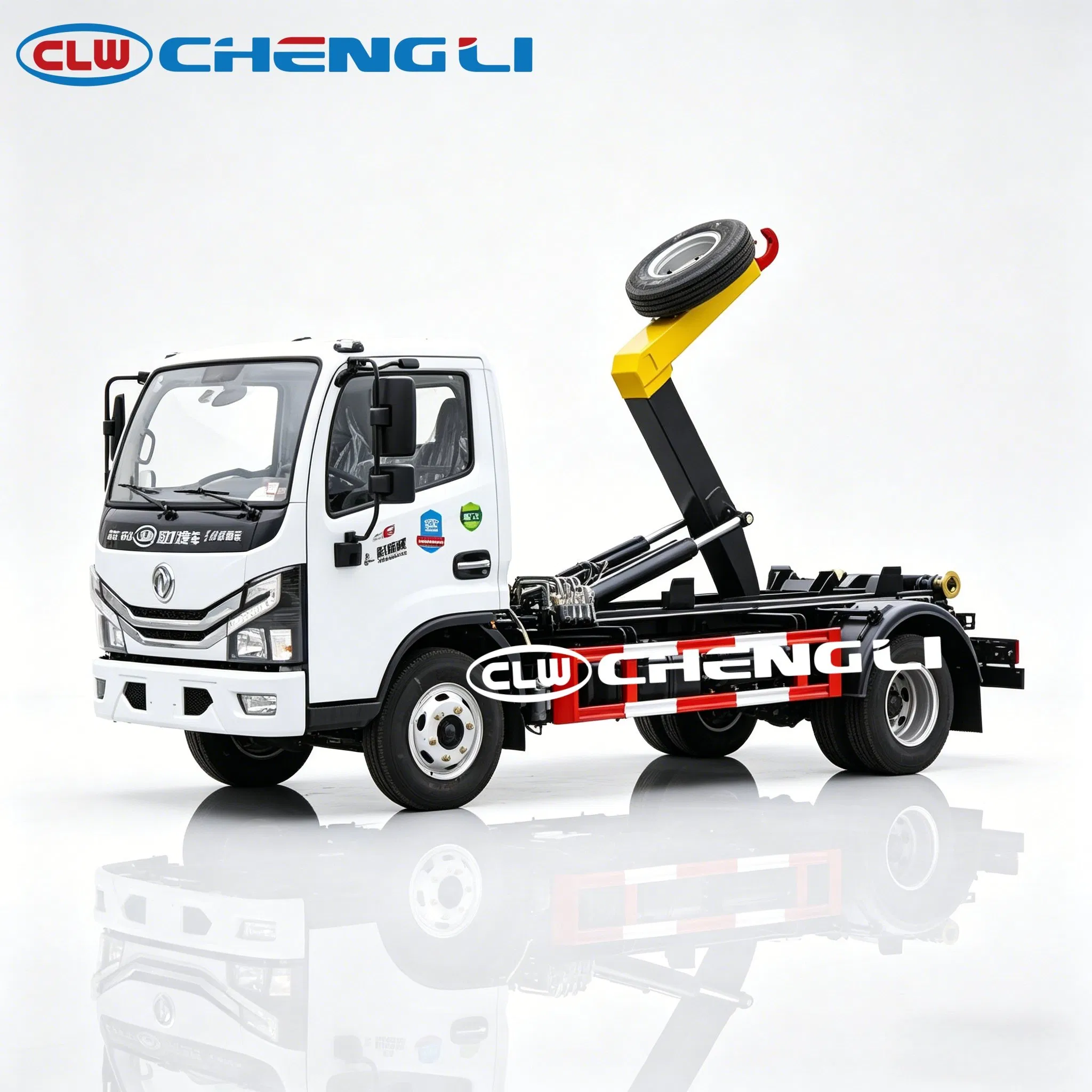
Does a dumpster truck carry the container or just its contents?
That is the first distinction to make in a purchasing enquiry. A detachable-container vehicle picks up the entire loaded container, secures it for transport and carries it to an unloading point. A collection vehicle that empties containers transfers the waste into its own body and leaves the container available at the collection location. Both may appear in searches for a dumpster truck, but they create different collection routines and require different equipment.
Start by describing what should remain at the site after collection. If the customer needs an empty container immediately, include the exchange arrangement in the operating brief. If the same container stays in position and is emptied during each visit, identify its lifting interface and the space available for the lifting movement. A familiar local name is useful, but it cannot answer these questions on its own.
How do the three handling systems compare?
| System | What happens to the container? | Interface to check | Volume and chassis decision |
|---|---|---|---|
| Skip loader | The arms lift a skip onto the vehicle for transport. | Lifting points, attachment arrangement, skip geometry and loaded mass. | Choose the skip volume with its actual load mass; match the lifting rating and complete vehicle. |
| Hook lift | A hook mechanism draws a compatible container onto the carrier. | Hook height, pickup bar, rails, rollers, locks and container length. | Match the complete container drawing, lifting envelope, axle loads and transport mass. |
| Front loader | Front lifting equipment empties a compatible container into the body, then lowers it. | Fork pockets or specified pickup interface, container mass and lifting clearance. | Container size and truck-body volume are different figures; evaluate both with payload and access. |
There is no universal container volume or chassis class attached to any of these names. Two containers with equal stated volumes can have different dimensions, empty masses and lifting interfaces. Likewise, two trucks with similar overall dimensions can have different available payloads. Ask for the exact configuration instead of treating a broad category as a dimensional standard.
When should you consider a skip loader?
A skip loader truck is a container-transport option when the collection point uses skips that suit its lifting arrangement. The vehicle brings the skip onto its load area rather than collecting individual small bins into a fixed compactor body. The purchasing brief should describe how skips are filled, where they stand and whether the collection visit removes, exchanges or returns the same skip.
For an existing skip fleet, provide drawings and photographs showing the lifting points as well as the complete container. Include the empty mass and the expected mass when loaded. Do not assume that the presence of lifting lugs establishes compatibility with every chain, arm or attachment arrangement. The selected system must be compared with the actual geometry and load conditions.
Also describe the collection surface, slope, approach and available working area. The truck's road dimensions do not describe the full space used during lifting. This guide explains selection principles; the equipment manual, site assessment and trained operating procedures govern the actual lifting operation.
When is a hook lift a better starting point?
A hook lift truck uses a hook-based mechanism to load a compatible detachable container. Containers may be left at collection locations and exchanged according to the operator's plan. This can separate the time spent filling the container from the time spent transporting it, but it does not remove the need to plan truck availability, container availability and unloading access together.
The container drawing is essential. Hook height alone is not a complete match: pickup geometry, rails, rollers, locking positions and length also matter. The empty container consumes part of the available transport mass, while its contents affect the lifting and axle-load checks. A larger box is not automatically a higher-capacity operating solution if the material is dense or the chassis reaches its permitted mass first.
Before changing container systems, review the full cycle: deliver an empty container, collect the loaded one, travel, queue, unload and return. Include inspection and preparation between tasks. The number of containers and the number of trucks are separate planning decisions; one cannot be calculated reliably from the other without the cycle and filling information.
Container inventory also needs an allowance for containers being filled, transported, emptied or serviced at the same time. Record these states separately when planning the exchange cycle. A container awaiting repair is not available for a customer simply because it appears in the total fleet count. Describe whether different waste streams require dedicated containers and how they will be identified. This helps the buyer compare an equipment order with the intended collection pattern instead of selecting a carrier without considering the boxes it must serve.
What is different about a front loader?
A front loader normally lifts and empties compatible containers into the vehicle's body. The container is then returned to its position, while the waste travels within the truck. This is a different job from carrying the loaded container away. Buyers should therefore specify whether they need an emptying service during the visit or complete container exchange.
The lifting path above and in front of the cab makes operating clearance an important part of the site description. Container pickup details and loaded mass also remain necessary. A container designed for a hook lift should not be treated as a front-loader container merely because both are called dumpsters. This comparison explains the distinction; the CLW ranges linked here focus on skip loader and hook lift configurations.
Is a dumpster truck the same as a dump truck?
A dump truck usually carries material in a tipping body that remains attached to the vehicle. A hook lift or skip loader instead handles a separate container. Both arrangements may discharge material by tipping in an appropriate configuration, but their collection interfaces and container logistics are different. Describe how the material is loaded before comparing either vehicle for the job.
For dense construction material, evaluate material mass, loading method, body suitability and the receiving site's unloading conditions. For mixed household waste, consider the appropriate containment and collection body rather than assuming that any open container or tipping body suits the stream. Waste characteristics, destination requirements and the selected equipment determine the proposal; the word dumpster does not establish suitability.
Which dimensions and load figures should you request?
Separate four groups of measurements: the truck in road condition, the container, the lifting movement and the unloading arrangement. Record gate width, overhead restrictions and the space available for turning and positioning. A truck that can enter a site may still lack the space needed to exchange its container there. Ask for operating-envelope information for the selected configuration, rather than adding an arbitrary clearance margin.
For mass, identify the complete vehicle's permitted gross mass, axle limits, operating empty mass, container mass and intended waste load. A lifting rating is not automatically the legal road payload. Neither does the difference between a chassis rating and its bare mass establish the waste payload of a completed truck. Body equipment, container, crew and carried items all belong in the complete assessment.
The container and lifting compatibility guide explains which interface information to send. For vocabulary differences between roll-off and hook-lift systems, use the roll-off versus hook lift comparison. Keep a drawing reference in the quotation so that a container description remains tied to a particular geometry.
How do LHD, RHD and the working side affect the choice?
State left-hand drive or right-hand drive at the start of the enquiry. Driving position does not by itself define the side on which the body controls, collection equipment or pedestrian access should be arranged. Show the traffic direction and the intended collection position, and identify the requirements for the destination. Do not infer driving position from the words skip lorry or dumpster truck.
Read the complete RHD build considerations alongside the LHD and RHD buyer guide. These checks help describe the order; they do not replace destination registration requirements or establish that every chassis is available in both layouts.
How should you compare quotations and prepare the order?
Compare complete offers against the same waste stream, container drawing, vehicle quantity and destination. Identify whether the offer includes a carrier only, containers, lifting equipment or a complete agreed combination. Ask for the documents, operating information, inspection scope and support arrangements needed by your organisation. Keep differences visible rather than comparing only the largest volume or the lowest headline price.
Plan the relationship between collection visits, spare containers and the receiving facility before committing to a fleet size. HSE's guidance on transport-related lifting highlights the importance of keeping people clear of moving vehicles and containers. Use a site-specific operating plan with trained personnel; a purchasing comparison is not an operator instruction.
To request a configuration discussion, send CLW the destination country, waste type, collection and unloading method, required vehicle quantity, driving position and chassis preference. Attach current container drawings or photographs, empty and loaded masses, route restrictions and any specified emissions requirements. Discuss your garbage truck order or email [email protected]. A clear handling brief makes it easier to select the appropriate vehicle family and compare the proposed equipment.
Questions buyers ask
Does every dumpster truck take the whole container away?
No. Skip loaders and hook lifts carry compatible containers. A front loader normally empties a container into its body and returns the container to the collection point.
Can a skip loader use a hook lift container?
Do not assume interchangeability. Match the container drawing, lifting points or pickup arrangement, loaded mass and securing system to the selected equipment.
Does a larger container always carry more waste?
Not necessarily. Usable waste mass is constrained by the complete vehicle, axle limits, container mass and lifting conditions as well as available volume.
Does CLW sell the same truck for every dumpster system?
The linked CLW skip-loader and hook-lift ranges serve different container interfaces. Specify the handling method and existing equipment so the proposed vehicle can be assessed as a complete configuration.