
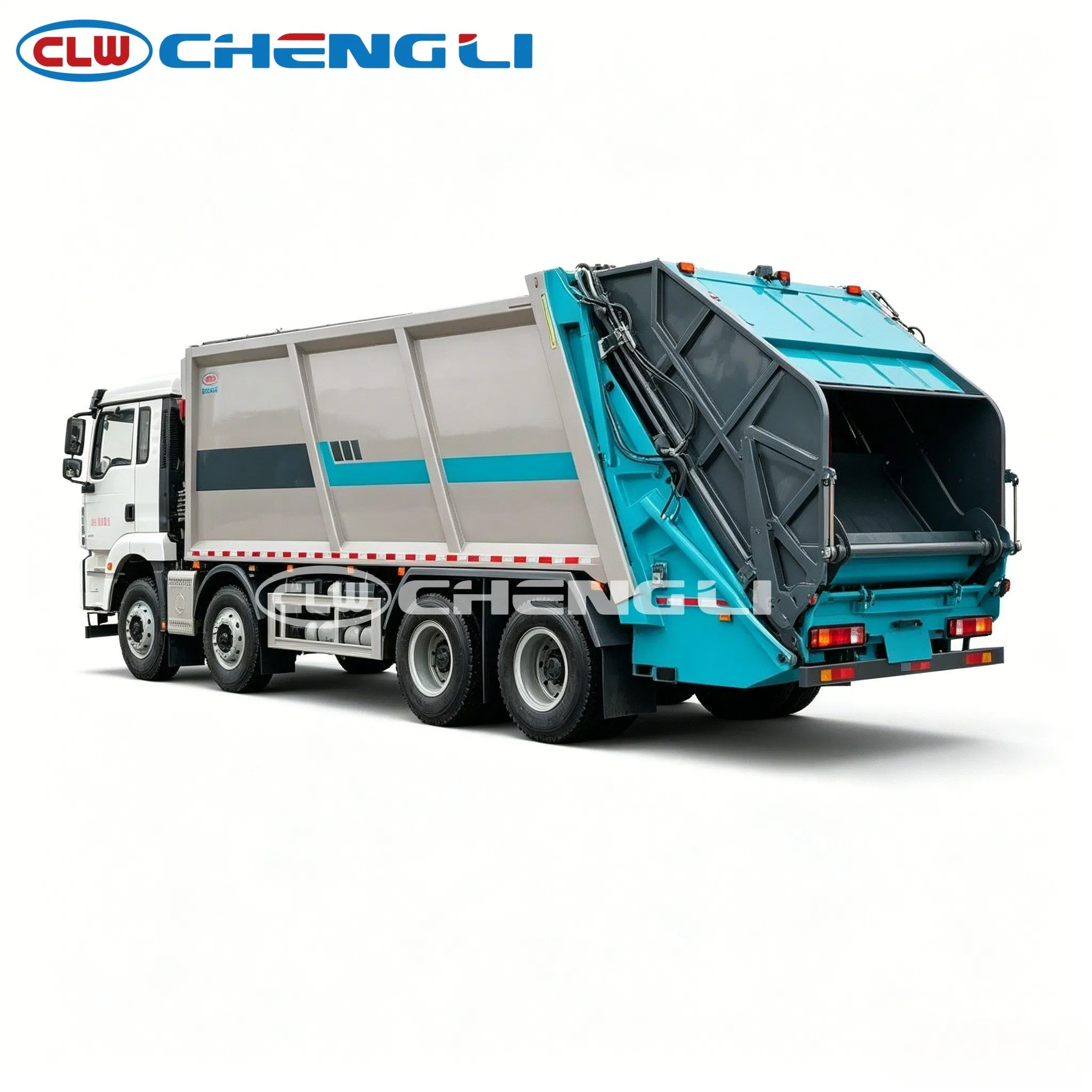
Start with the container, not the continent
Front loaders are a genuine collection option, not simply a different name for a rear-loading compactor. McNeilus describes front-loading products for commercial and residential work. That does not establish which system is best for a particular overseas route. A buyer still needs to examine the actual containers, premises and complete vehicle arrangement before comparing offers.
There is no sound reason to select a truck solely because a vehicle type is associated with North America or another region. A commercial route with matched front-lift containers differs from a route using small wheeled bins, even in the same city. This comparison concerns system choice; the CLW purchase paths below focus on rear-loading compactors and removable-container alternatives.
What changes between front and rear loading?
A front-loading arrangement picks up a compatible container using front lifting equipment and tips it into the body from above. A rear loader receives waste through its rear loading area; its bin-handling equipment depends on the specified body and pickup interface. Neither name alone establishes container compatibility, useful payload, crew requirements or the time needed to complete a route.
Describe how waste is presented at each stop and how the vehicle must unload at the receiving site. Include drawings of existing containers and any lifting interface, rather than sending only a photograph of the desired truck. CLW’s rear-loader compactors provide a vehicle-family starting point, with the actual bin lifter and body configuration defined for the enquiry.
Which site constraints should decide the comparison?
| Buying question | Front-loading arrangement | Rear-loading arrangement |
|---|---|---|
| Existing containers | Match front pickup points, dimensions and loaded mass | Match rear pickup profile and the specified lifter |
| Working clearance | Check the complete raised-container and lift envelope | Check rear loading space and the complete working envelope |
| Site access | Check approach, turning and space to align with containers | Check approach, turning and access to the rear working area |
| Collection task | Define container quantities, waste and stop pattern | Define bins or other presentation and stop pattern |
| Support | Identify chassis and lifting-system service needs | Identify chassis, body and lifter service needs |
| Buying scope | Include containers and site changes where needed | Include compatible bin handling and any site changes |
Do not use the table as a universal clearance specification. Request drawings and dimensions for the proposed complete vehicle and its equipment in the relevant positions. Check overhead obstructions and the route through the customer’s premises using those drawings. A truck that can enter a site may still lack space for its loading or unloading operation.
Will your existing bins still work?
For a front loader, provide the container’s pickup geometry, dimensions, loaded mass and condition of the relevant lifting features. For a rear loader, identify the actual bin profile and the lifter that will handle it. Do not assume a container is compatible merely because its capacity seems suitable or it has been used with a different collection vehicle.
Where a change of system requires different containers, include their purchase, positioning and customer-site changes in the comparison. Also describe how those containers reach the collection point. A lower vehicle price can be a poor basis for a decision if it leaves a significant part of the collection system outside the budget.
How should access and working arrangements be assessed?
Check the approach, turning area, stopping position, pedestrians and interaction with other site traffic. Plan loading access as part of the route rather than only checking the parked vehicle’s width. UK HSE waste-transport guidance highlights risk assessment and reducing reversing; use that as an operational planning principle, not as a declaration of compliance in every destination.
Do not promise a fixed crew size or collection time from the body name. Staffing, training and procedures depend on the offered equipment and actual task. Ask for the operating information and familiarisation required for that vehicle. If a route estimate is provided, state the container type, stop pattern, travel and unloading assumptions behind it; do not treat a demonstration at one site as a guaranteed fleet result.
When is a removable-container vehicle worth comparing?
A hook-lift vehicle moves matched removable containers, rather than collecting through a compactor’s front or rear opening. It can be a relevant alternative when the intended task is container exchange and transport. It is a different system, not a front-loader substitute that automatically works with existing front-lift containers. Define the container, lifting interface, mass and unloading needs before making that comparison.
Review the light hook-lift and medium hook-lift categories if that transport task fits the project. The dumpster truck comparison explains the distinction between these vehicle families. Check complete-vehicle payload and container compatibility separately from the informal term dumpster.
Compare support and purchase scope without assumed regional prices
Ask which chassis, body and loading-system parts are supplied with the proposed vehicle, what operating documents are included and how service enquiries are handled. Do not infer a service network, warranty period or guaranteed parts delivery from the loading direction. Put any agreed support obligations into the order rather than relying on a generic front-loader or rear-loader description.
Compare complete written offers on the same destination and delivery basis. Include vehicle, compatible containers or bins, agreed accessories, transport and any required site changes as distinct items. There is no universal front-versus-rear price difference that can replace those offers. A claimed productivity saving also needs a route-specific calculation; do not assume it from a manufacturer’s different vehicle or another operator’s application.
Turn the comparison into a collection brief
Send the destination, quantity, waste stream, container drawings, typical loaded masses and site constraints. State the required driving position, which depends on the selected chassis and model, and explain the collection calendar and receiving facility. Mark which parts of the existing container system must remain and which can change. This separates the actual need from a preference for a familiar truck shape.
For business collections, use the commercial and industrial waste vehicle guide to frame the application. Then send CLW your vehicle enquiry for a rear-loader or suitable container-carrier proposal. Ask for a defined complete arrangement, rather than an unsupported promise that one loading direction is always better outside North America.
Questions buyers ask
Can existing front-lift containers be used with any rear loader?
No. Container capacity does not establish compatibility. The pickup geometry, dimensions, loaded mass and proposed lifting interface must match the specified collection equipment.
Does a front loader always require less labour?
Do not assume a fixed crew size from the loading direction. Staffing and working arrangements depend on the actual equipment, site, collection task and operating procedures.
Is a hook lift the same as a front-loading garbage truck?
No. A hook lift exchanges and transports matched removable containers. A front loader lifts a compatible container to empty it into its body. Their interfaces and collection tasks are different.
What can I ask CLW to quote after this comparison?
Send the destination, quantity, waste, container interface, site constraints and driving-position requirement. Ask for a defined rear-loader or suitable removable-container vehicle arrangement, including the equipment and delivery scope.