
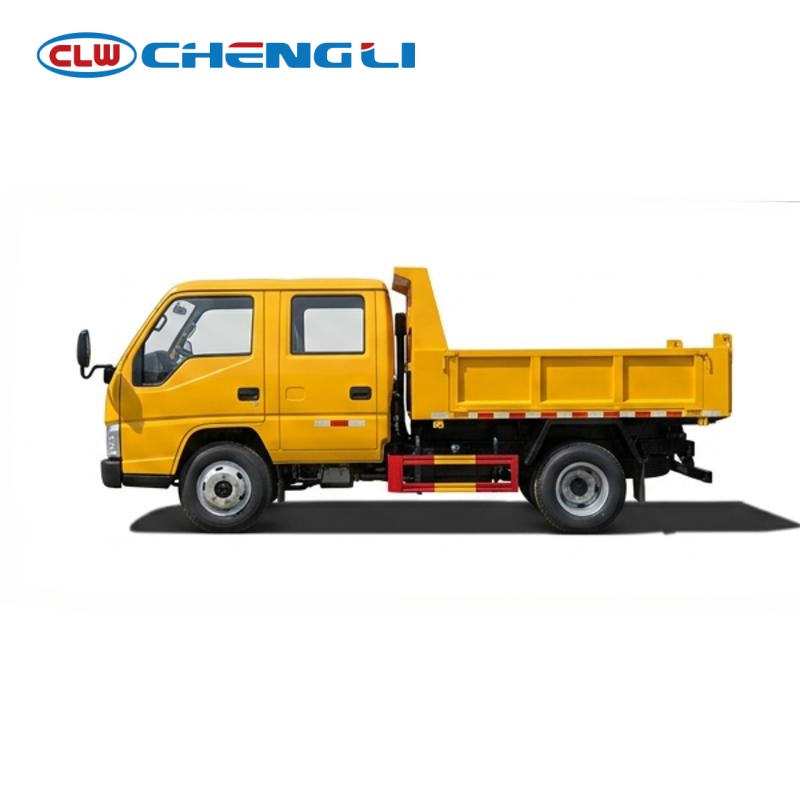
The JMC 60 6HX and 70 6HX are hydraulic-tipping waste collection trucks with 4×2 drive and manual transmission. Choose according to the loading and unloading process. For a project requiring automatic bin lifting, compaction or sealed containment, specify those equipment needs in the quotation.
JMC 60 6HX and JMC 70 6HX are model names. For purchasing, specify the complete chassis, body dimensions, GVW and permitted waste payload separately; the model numbers are not payload ratings.
Prices are in USD per vehicle. Define quantity, chassis and body, equipment, destination, trade term, freight, inspection and taxes in the written quotation. Compare offers with equivalent equipment and delivery scope. On small screens, scroll the tables horizontally.
1. JMC 60 6HX and 70 6HX reference prices
| Linked product | Unloading system | Reference price per vehicle |
|---|---|---|
| JMC 60 6HX waste dump truck | Hydraulic tipping | USD 10,000–20,000 |
| JMC 70 6HX waste dump truck | Hydraulic tipping | USD 20,000–28,000 |
The 60 6HX has the lower price range, while the upper endpoint of its range meets the lower endpoint of the 70 6HX at USD 20,000. This does not establish a fixed surcharge for upgrading a particular chassis. The quotation needs to identify what changes: selected vehicle size, body construction, tipping equipment, destination specification and included accessories. Avoid averaging the intervals into a price for an unspecified build.
2. Drive layout and tipping equipment
| Vehicle specification | JMC 60 6HX waste dump truck | JMC 70 6HX waste dump truck |
|---|---|---|
| Drive layout | 4×2 | 4×2 |
| Gearbox | Manual | Manual |
| Discharge method | Hydraulic tipping | Hydraulic tipping |
| Overall-dimension options | 2 | 3 |
Plan the load using both usable body volume and permitted vehicle mass. Include the selected body, operating equipment and axle distribution. Use the agreed chassis specification for engine and fuel requirements, and check the complete operating envelope at the receiving site.
The compactor versus dump-truck guide explains the collection and unloading differences to check before substituting a tipping vehicle for a compactor.
3. Compare the actual dimensional options, not the model numbers
| Product / option | Length | Width | Height |
|---|---|---|---|
| JMC 60 6HX waste dump truck — A | 6,100 mm | 2,050 mm | 2,150 mm |
| JMC 60 6HX waste dump truck — B | 5,990 mm | 2,050 mm | 2,080 mm |
| JMC 70 6HX waste dump truck — A | 6,283 mm | 2,090 mm | 2,400 mm |
| JMC 70 6HX waste dump truck — B | 5,700 mm | 2,050 mm | 2,350 mm |
| JMC 70 6HX waste dump truck — C | 5,700 mm | 2,030 mm | 2,300 mm |
The 70 6HX is not necessarily longer than the 60 6HX. Its 6,283 mm option is longer than either 60 6HX option, but its 5,700 mm options are shorter than both. Each 70 6HX option in the table is taller than either 60 6HX option. Compare the complete dimensions of the selected option; the model name alone does not determine vehicle size.
The vehicle dimensions guide provides the access checks to apply to each complete option, including working space beyond the parked vehicle.
Keep the length, width and height of each complete option together. Show the selected body, cab, wheelbase and overhang on the order drawing. Include mirrors, steps and other projections when assessing access, and check the full turning and loading movement.
4. JMC 60 6HX: investigate the lower-price configuration
The JMC 60 6HX waste dump truck has two overall-dimension options and a price range of USD 10,000–20,000 per vehicle. Consider it where the complete vehicle fits the route and hydraulic tipping suits the receiving site. Use the chosen body and permitted waste payload to estimate the number of trips.
Describe whether the waste is bagged, loose, wet, dusty or bulky, and specify the required cover, retention and cleaning arrangements. Include those choices in the body design, operating-mass calculation and quotation scope.
5. JMC 70 6HX: select the exact option before comparing
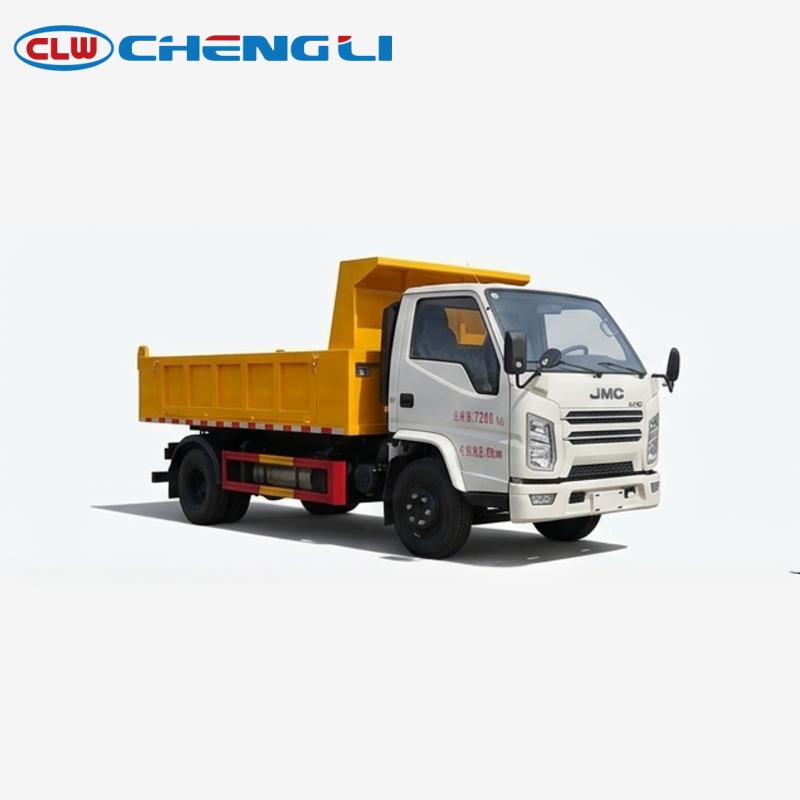
JMC 70 6HX waste dump truck has a USD 20,000–28,000 reference price range and three dimensional options. It is worth comparing where one of those specific options meets a measured access or body requirement. The name “70” does not establish more body volume or payload than “60”. Ask the offer to identify the exact chassis, body, lifting gear and mass basis behind the selected option.
For example, a location that accepts a 5,700 mm length may still reject a 2,350 mm static height, or require additional working height when the body tips. Conversely, the longer 6,283 mm option may conflict with a turning area even when its width fits. Check the selected truck through the whole operating movement on the site plan.
6. Plan loading, retention and tipping as one working cycle
Define how waste reaches the body. A hydraulic tipping specification describes discharge; it does not by itself provide a loading crane, bin lifter or automated collection system. State whether workers, a loader or another agreed device load the vehicle, and identify the material dimensions and loaded mass. Confirm body access and equipment compatibility before deciding the vehicle can serve existing collection points.
The collection and transfer workflow helps identify which stage the tipping truck must serve and what the receiving facility must accept.
During travel, the required body arrangement depends on the material and destination requirements. Ask the supplier to define covering, load retention, tailgate closure and cleaning provisions for the agreed build. Do not infer liquid-tight construction or a particular permitted waste type from a general product category. Any specialised body or accessory belongs in the mass calculation as well as the price.
At the receiving point, check ground conditions, positioning space, rear clearance, overhead obstructions and the full raised-body envelope. Static height differs from the raised-body height. Use the selected truck's tipping geometry and operating instructions to check working clearance and unloading time. Include the time to queue, position, unload, lower the body and return to work in the daily route estimate.
7. Build comparable offers and a realistic fleet budget
| Question to resolve | Information required |
|---|---|
| Which exact vehicle is supplied? | Chassis identity, chosen dimensional row, wheelbase, engine, fuel and driving position |
| How much waste can it carry? | Completed mass, GVW, individual axle limits, occupants/options and permitted waste allowance |
| What body and equipment are included? | Internal dimensions, volume, material, cover, tailgate, loading equipment and tipping system |
| Can it complete the intended shift? | Measured waste quantity, stops, loading method, loaded travel, queues and unloading time |
| What does the commercial offer cover? | Quantity, currency, trade term, freight, taxes, inspection, documents, training and initial spares |
Compare the limiting load by both volume and mass. A spacious body may reach the permitted mass first, while light material may fill the body first. Use measured route quantities and waste density to calculate the trips needed for the selected complete vehicle.
For equivalent work, include vehicle payment or depreciation, crew, energy, tyres, maintenance, loading equipment, cleaning and disposal travel. CLW offers quantity-based pricing and phased delivery; request a quotation for the actual fleet quantity and required batches.
8. Send a configuration-specific JMC enquiry
Start with request a configuration quotation and identify the required dimensional option. Send waste type, measured daily mass and volume, loading method, container details, route photographs, unloading-site drawings, shift hours, destination and fleet quantity. Define the body, permitted load, containment and accessories in the complete order specification before requesting the final quotation.
Explore other garbage-truck and chassis configurations in the chassis comparison library.
Questions buyers ask
Which JMC products are compared?
The JMC 60 6HX and JMC 70 6HX waste collection dump trucks. Both use 4×2 drive, manual transmission and hydraulic tipping.
Do 60 and 70 mean 6-tonne and 7-tonne payloads?
No. The model names do not specify waste payload. Determine the permitted waste load from the exact chassis and body, complete operating mass, GVW and axle limits.
What are the JMC reference prices?
Per vehicle: USD 10,000–20,000 for the 60 6HX and USD 20,000–28,000 for the 70 6HX. The written quotation defines the configuration and commercial scope.
Is the 70 6HX always longer?
No. It lists a 6,283 mm option and two 5,700 mm options, while the 60 6HX lists 6,100 mm and 5,990 mm lengths. Compare each complete dimensional option.
Are these rear-loader compactors?
Both are hydraulic-tipping waste collection trucks. Choose a rear-loader compactor when the collection task requires waste compaction, and specify the bin lifter, containment and cleaning equipment for that application.
Does static height include the raised tipping body?
Do not treat the published static dimensions as the raised-body envelope. Obtain the selected tipping geometry, clearances and operating instructions for the receiving site.