
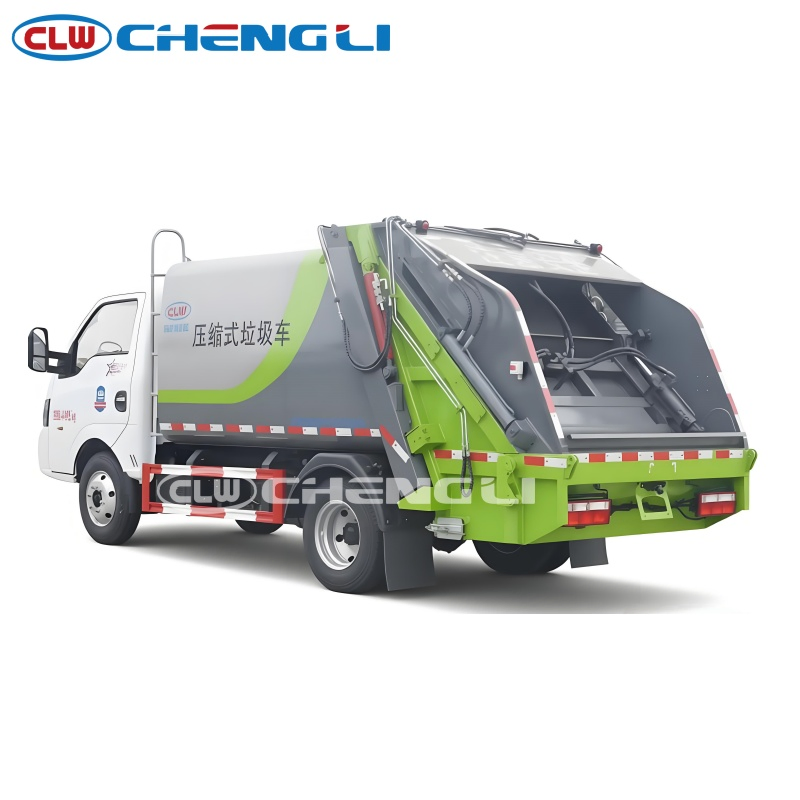
Do garbage lorry and refuse lorry mean different vehicles?
Often they are alternative names for a waste collection vehicle, rather than two distinct machines. A buyer may use either phrase for a rear-loading compactor, while a tender uses a more specific body description. The useful question is not which word sounds more technical, but how the vehicle receives waste, carries it and discharges it at the receiving facility.
Start with the operating task and translate the local name into a defined equipment family. A compactor collects suitable waste into its body; a hook lift or skip loader moves matched removable containers. A common English name does not make these systems interchangeable. CLW’s compactor truck range supports enquiries about that body family, with the exact configuration still defined for the order.
Does the word lorry prove the cab is RHD?
No. A regional English term is not a steering specification. Record the final destination and write “right-hand drive” in full alongside RHD when that is required. State the normal road traffic direction separately from cab position. The country driving-position guide explains this distinction without treating a traffic table as permission to import or register a particular truck.
For a dealer serving several markets, separate vehicle quantities by final destination and driving position. Do not copy an order headed refuse lorry and assume its cab matches a previous customer’s truck. Availability of LHD or RHD depends on the selected chassis and model. Ask for an exact proposed chassis rather than a general assurance that every catalogue image represents both driving positions.
How should local terminology become a purchase description?
Keep the familiar name in the enquiry, but follow it with a functional description. For example, specify a complete rear-loading compactor, identify the bins it must handle and state the destination and required driving position. Add quantities and the actual collection task. This tells a supplier substantially more than a request for a price for a refuse lorry.
| Enquiry wording | What it still leaves open | Add to the buying brief |
|---|---|---|
| Garbage lorry / refuse lorry | Loading method and vehicle family | Rear loader, side-loading system or container carrier |
| RHD garbage lorry | Exact chassis and body/control arrangement | Chassis designation, cab and equipment layout |
| Large compactor | Usable load and access constraints | Body volume, complete mass, useful payload and dimensions |
| Compatible with our bins | Pickup geometry and working limits | Bin drawings, interface and maximum loaded mass |
| Ready for our market | Actual destination requirements | Country, road use and required vehicle documents |
| Complete package | Included equipment and delivery boundary | Itemised configuration, support and delivery scope |
A clear description also helps compare alternatives. If one supplier proposes a different chassis or loading arrangement, evaluate what changes in the task and included scope. Do not compare only the unit price when one offer includes a bin lifter and the other leaves it outside the vehicle specification. Retain the final agreed description with the purchase documents.
Which chassis and mass details need an answer?
Request the exact chassis model, cab version, wheelbase, axle arrangement, transmission and proposed body installation. Distinguish gross vehicle mass from waste payload. A body’s cubic-metre capacity tells you about space, while the complete vehicle’s useful load and axle distribution constrain the mass it can carry. Neither the lorry label nor an RHD cab determines those limits.
Use the chassis and body matching guide to organise dimensions and mounting questions. Include access widths, overhead restrictions and unloading space from the actual route. Do not assume two similar-looking cabs have identical body allowance or useful payload. Compare the offered complete configuration, including the weight and space occupied by the loading equipment.
How should the buyer describe the waste and daily workload?
Identify the material being collected and how it is presented: wheeled bins, bags, loose material or removable containers. Give measured daily mass or volume with its measurement basis, the collection calendar and the intended receiving point. A general household route and a dedicated commercial route can have different bin interfaces and stop patterns even when both use rear-loading vehicles.
Record the cycle from collection through travel, queue, discharge and return. Avoid requesting a fixed body size solely from population or the size of another city’s fleet. A larger body can still be limited by mass or access. For an enquiry, explain which part of the existing operation is limiting service, so a proposed configuration addresses the task rather than merely changing the vehicle name.
Why is the collection working side a separate requirement?
RHD identifies the driver’s position, not where every body control or bin interface is installed. Show where bins are presented and where the crew will stand. Identify the operator positions for loading and discharge, and the view available from each. A rear-loader brief and a side-loading brief need different layout discussions even when both use an RHD chassis.
The full RHD configuration checklist separates cab, visibility, lamps, controls and documents. Use it to request configuration-specific views or drawings. Do not treat a mirrored photograph as evidence of a different build. The final schedule should describe the actual body control arrangement, with any requested accessory identified as included or separately offered.
What makes existing bins a buying issue?
Existing bins can be a major part of the service system. Provide dimensions or drawings, photographs of the pickup interface and the maximum loaded mass to be handled. Bin volume alone does not identify its lifting arrangement or prove compatibility. State whether one bin type must be retained throughout the route or whether the purchase includes several different collection interfaces.
For a rear-loading compactor enquiry, identify the proposed lifter and its connection to the bins. For removable-container work, define the hook or skip interface instead of borrowing wheeled-bin terminology. Discuss the actual container with its handling equipment; neither an RHD cab nor a similar cubic-metre label makes different interfaces interchangeable.
Which route observations should affect the configuration?
Record narrow approaches, turning space, parked vehicles, pedestrian exposure and the receiving facility’s access. Include photographs that show the working area as well as the vehicle entrance. The UK HSE’s waste transport guidance highlights advance route assessment and reducing reversing. These considerations help define the operating brief; they are not a worldwide vehicle approval.
Evaluate the route as it will actually be worked. A favourable overall width does not prove adequate room to present bins, operate a lifter or unload. State whether the collection vehicle enters the receiving facility directly or delivers to a transfer arrangement. Request dimensions and operating envelopes for the proposed configuration rather than inferring clearance from a side photograph.
What should comparable RHD quotations include?
Ask for the same destination, chassis scope, body volume, useful payload basis, loading equipment and requested driving position in each offer. Identify included controls, paint or protection requirements, documents, spares and delivery boundary. Where a supplier offers an alternative, keep its differences visible in the comparison instead of merging details from several offers into one imagined truck.
Discuss quantity pricing and any phased delivery requirement against that consistent scope. Do not assume a generic RHD premium, discount percentage or production period. Ask for actual commercial terms for the proposed order. Separate optional support services from included vehicle equipment so a lower initial price does not hide a different set of deliverables.
Which documents and inspection checks belong with the order?
Identify the documents needed for the chassis, body and destination, and specify the language of labels and operating information. An RHD label does not establish emissions acceptance, certification or registration eligibility. The relevant local parties should identify the current requirements for the exact vehicle class and configuration. Keep those requirements with the enquiry and final purchase schedule.
Agree how the actual cab, body, interface and control functions will be checked before shipment. Inspection should refer to the accepted configuration and vehicle identity. It should not rely on images of a similar LHD truck, or imply that a general inspection automatically certifies registration. Define warranty and support arrangements separately in the order rather than importing promises from another product description.
What should be included in the final handover information?
Keep a vehicle-specific configuration schedule, relevant manuals and identification information for the chassis and collection body. Identify which parts and maintenance information apply to the delivered arrangement. Where one fleet contains several variants, distinguish their documents and references. A shared local name such as refuse lorry does not make all components or service instructions identical.
Define training or operational familiarisation requested for the actual equipment, its language and delivery format. Make the agreed scope clear rather than assuming a universal entitlement. The operator still needs an appropriate route and work plan. The purpose of a detailed purchase brief is to connect the vehicle, its collection interface and the information needed to use and maintain that configuration.
What should an RHD lorry buyer send CLW?
Send the final country, vehicle quantity, preferred driving position, waste type, daily workload, existing bin or container details, route and unloading access. Include chassis preferences and defined emissions or documentation requirements. If a tender uses garbage lorry or refuse lorry, add the functional description and any drawings that explain what must remain compatible.
Request a CLW waste truck quotation with that operating brief. Ask for a specific proposed chassis and a complete body-and-control scope. Clear requirements allow price, collection capability and destination needs to be compared together. The familiar local name can remain the starting point, but the accepted configuration should define the vehicle that will actually be supplied.
Questions buyers ask
Is a refuse lorry always different from a garbage lorry?
No. These can be regional names for the same collection task. Specify the loading system, body, chassis and bin interface to identify the vehicle rather than relying on the name.
Can the word lorry be used instead of specifying RHD?
No. State right-hand drive explicitly if required and identify the final destination. The word lorry is not a steering, import or registration specification.
Does an RHD rear loader automatically match existing bins?
No. Provide the bins’ pickup geometry, dimensions and maximum loaded mass. The proposed lifter must be matched to that interface separately from the cab position.
What should be compared before choosing the lowest quotation?
Compare the same chassis scope, body capacity and payload basis, bin lifter, controls, documents and delivery boundary. Identify alternatives and optional support separately before comparing unit prices.